
What's Happening?
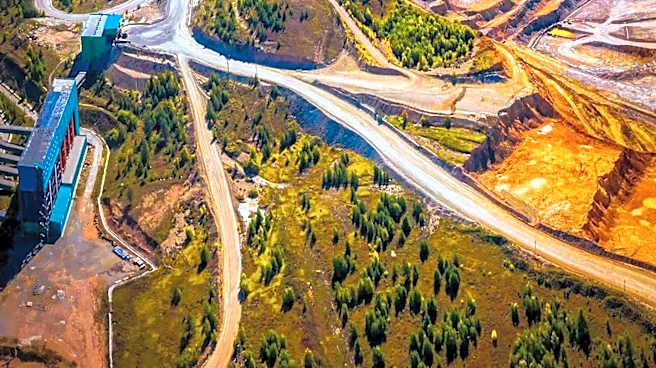
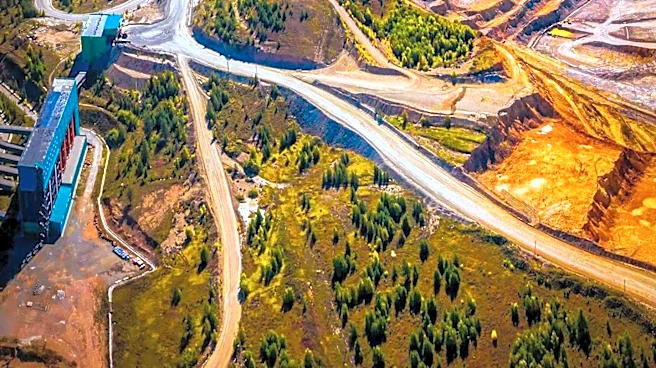
The historical significance of California's Mountain Pass mine, once the world's principal source of rare earths, is being re-examined in light of current U.S. concerns about securing critical mineral
supplies. Discovered in 1949, the mine played a crucial role in the U.S. rare earth industry, particularly from 1965 to 1995, by supplying europium for color television screens. Molybdenum Corp. of America, the original operator, expanded production significantly during this period. However, the mine faced challenges due to growing Chinese production, which drove down prices, and environmental issues, leading to the shutdown of its separation plant in 1998 and mining suspension in 2002. After multiple ownership changes and a bankruptcy, MP Materials acquired and restarted the operation in 2017, now focusing on restoring separation capabilities and building U.S. metal and magnet manufacturing.
Why It's Important?
The history of the Mountain Pass mine is critical for understanding the current U.S. drive to re-establish its rare earth supply chain. The U.S. once held a dominant position in this industry, a stark contrast to today's reliance on foreign sources, primarily China. The mine's decline highlights how a rich mineral deposit alone is insufficient; processing expertise, customer demand, investment, and viable economics are equally crucial. The current efforts by MP Materials, supported by initiatives like the U.S. Department of Defense's arrangement in July 2025, underscore a national security imperative to reduce dependency on external rare earth suppliers. Rebuilding domestic rare earth processing and manufacturing capabilities is vital for U.S. technological progress and national defense, impacting industries from consumer electronics to advanced military systems.
What's Next?
MP Materials is actively working to restore full separation capabilities at Mountain Pass and develop U.S. metal and magnet manufacturing. This involves significant investment and technological advancements to overcome past challenges. The U.S. Department of Defense's support, including an equity investment, loan commitment, and price floor for neodymium-praseodymium products, signals a strong governmental push to ensure the long-term viability of domestic rare earth production. The focus will be on scaling up operations, improving efficiency, and developing a robust domestic supply chain that can compete globally. The success of these efforts will be crucial in determining the extent to which the U.S. can reclaim its industrial strength in rare earths and reduce its strategic vulnerabilities.
Beyond the Headlines
The story of Mountain Pass extends beyond mere mineral extraction; it reflects broader shifts in global industrial policy and national security. The initial boom was driven by consumer demand for color televisions, while the current revival is underpinned by national security concerns and the need for critical minerals in advanced technologies. This transition highlights how geopolitical factors and strategic interests can reshape industries. The environmental challenges faced by Mountain Pass in the past also serve as a cautionary tale, emphasizing the need for sustainable and environmentally responsible mining practices in the future. The long-term implications involve not only economic competitiveness but also the ethical sourcing of materials and the development of resilient supply chains that can withstand geopolitical pressures and environmental scrutiny.