
What's Happening?
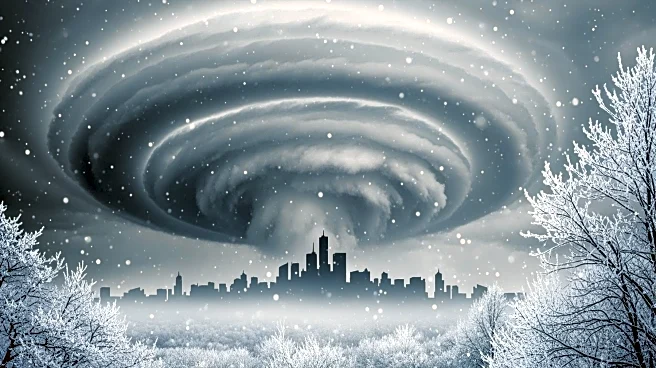
A bomb cyclone, a powerful winter storm characterized by rapid intensification, is forecasted to hit New York City this weekend. The storm is expected to arrive Saturday night and persist through Sunday,
potentially dropping up to 3 inches of snow on the city, which is still recovering from a recent heavy snowfall. Meteorologists from AccuWeather warn of strong winds accompanying the storm, with temperatures already between 14 and 24 degrees Fahrenheit, leading to wind chills that could plunge below zero. While the storm is expected to bring challenging conditions, it is not anticipated to be as severe as the previous Winter Storm Fern. However, areas east of the city, such as Long Island, could experience more severe weather, with up to 6 inches of snow and potential white-out conditions.
Why It's Important?
The impending bomb cyclone poses significant challenges for New York City and surrounding areas, particularly in terms of transportation and public safety. The combination of snow and frigid temperatures can lead to hazardous road conditions, impacting commuters and emergency services. Additionally, the storm's timing, following closely on the heels of a previous heavy snowfall, could strain city resources and complicate cleanup efforts. For residents, the extreme cold and potential power outages pose health risks, especially for vulnerable populations. The storm also highlights the increasing frequency and intensity of severe weather events, raising concerns about infrastructure resilience and emergency preparedness in urban areas.
What's Next?
As the storm approaches, city officials and emergency services are likely to prepare for potential disruptions, including road closures and public transportation delays. Residents may be advised to stay indoors and take precautions against the cold. The storm is expected to pass by Sunday night, but cold temperatures will persist into the following week, with only minor flurries forecasted. Authorities will need to assess the storm's impact and coordinate cleanup and recovery efforts, particularly in areas hardest hit by snow and wind.