






What's Happening?
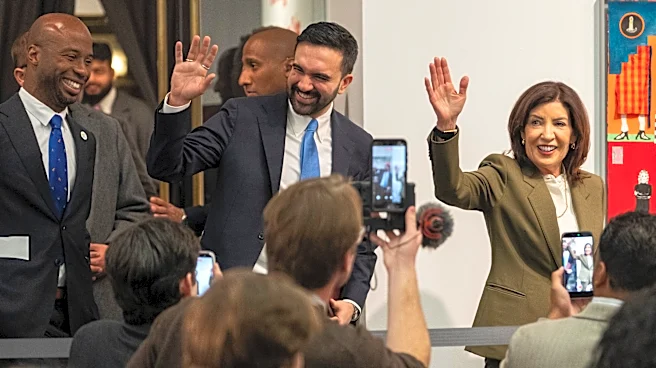
Governor Kathy Hochul of New York is advocating for more stringent sanctuary policies that would limit cooperation between local law enforcement and U.S. Immigration and Customs Enforcement (ICE). Hochul has proposed a series of measures to be included
in state law, aiming to restrict police from collaborating with federal immigration agents unless a criminal conviction is involved or there is probable cause for a misdemeanor or felony. The proposed legislation also seeks to prohibit ICE agents from wearing masks and restrict their operations in public areas without a judicial warrant. These measures are part of ongoing budget negotiations with the Democrat-controlled Legislature, where legislative leaders are pushing for the New York 4 All Act, a comprehensive sanctuary proposal. Hochul's announcement comes amid closed-door discussions among lawmakers about the new immigration policy.
Why It's Important?
The proposed sanctuary policies by Governor Hochul could significantly impact the relationship between state and federal law enforcement agencies in New York. By limiting cooperation with ICE, the state aims to protect immigrant communities from federal immigration enforcement actions, which could lead to a decrease in deportations and increased trust in local law enforcement. However, the move has sparked concerns about potential racial profiling and the ability of law enforcement to address crimes involving immigrants. The policy shift reflects broader national debates on immigration and sanctuary cities, highlighting the tension between state and federal authorities over immigration enforcement.
What's Next?
As the budget negotiations continue, it remains to be seen whether the proposed sanctuary policies will be included in the final budget deal. Governor Hochul has indicated that discussions are still evolving, and the measures could be dropped from the budget altogether. The outcome will depend on the negotiations between the governor and legislative leaders, who are advocating for even stricter restrictions on ICE cooperation. The decision will likely influence future immigration policies in New York and could set a precedent for other states considering similar measures.