
What's Happening?
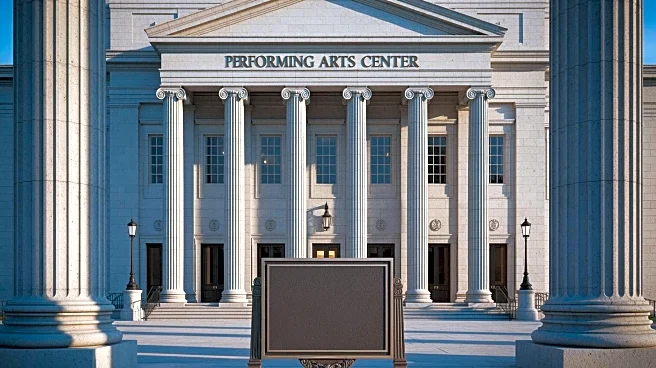
President Trump has announced the renaming of the John F. Kennedy Center for the Performing Arts to include his own name, calling it the Donald J. Trump and the John F. Kennedy Memorial Center for the Performing Arts.
This decision follows a pattern of Trump branding public institutions with his name, a move that has sparked significant debate. The renaming was justified by Trump spokesperson Karoline Leavitt as a tribute to Trump's contributions to the center's reconstruction and financial standing. However, this claim is contested, as ticket sales have reportedly declined since Trump's involvement. The renaming has also raised legal questions, as the Kennedy Center's name was established by Congress and cannot be changed unilaterally by the board. Despite this, signage changes have already begun, and Congress appears unlikely to intervene.
Why It's Important?
The renaming of the Kennedy Center highlights broader issues of presidential influence over public institutions and the potential erosion of historical and cultural legacies. By placing his name on a federally established venue, President Trump challenges the traditional boundaries of presidential power and public property rights. This move could set a precedent for future administrations, potentially leading to further politicization of cultural landmarks. The decision also reflects Trump's broader strategy of personal branding, which has been a hallmark of his career. Critics argue that such actions undermine the integrity of public institutions and prioritize personal legacy over national heritage.
What's Next?
The renaming of the Kennedy Center may face legal challenges, given that its name is protected by congressional statute. However, with Congress unlikely to act, the change may persist informally. This situation could prompt discussions about the legal frameworks governing public property and the extent of presidential authority. Additionally, public and political reactions may influence future decisions regarding the naming of other institutions. Stakeholders, including cultural leaders and policymakers, may seek to establish clearer guidelines to prevent similar occurrences in the future.
Beyond the Headlines
The renaming of public institutions by a sitting president raises ethical questions about the use of public resources for personal branding. It also reflects a broader cultural shift towards the commodification of public spaces. This trend could have long-term implications for how national heritage is preserved and interpreted. The controversy may also influence public perceptions of presidential legacy, highlighting the tension between personal ambition and public service. As such, this development serves as a case study in the balance of power between individual leaders and collective national identity.