


What's Happening?
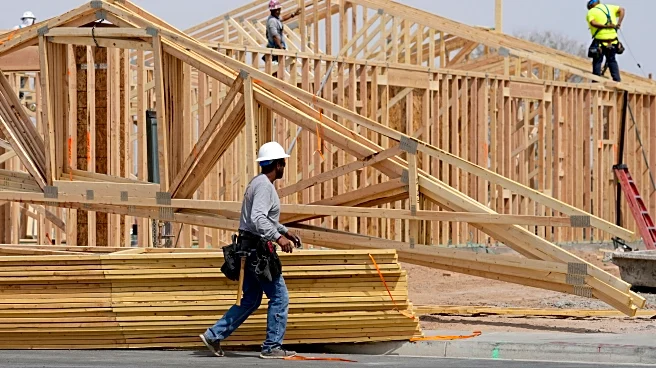
President Trump is facing economic challenges as recent job reports indicate a loss of 92,000 jobs in February, contrary to previous estimates of job growth. The Labor Department's revised figures have raised concerns about a potential recession, with
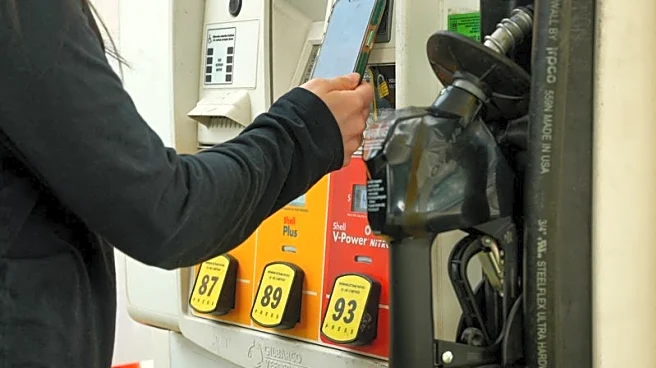
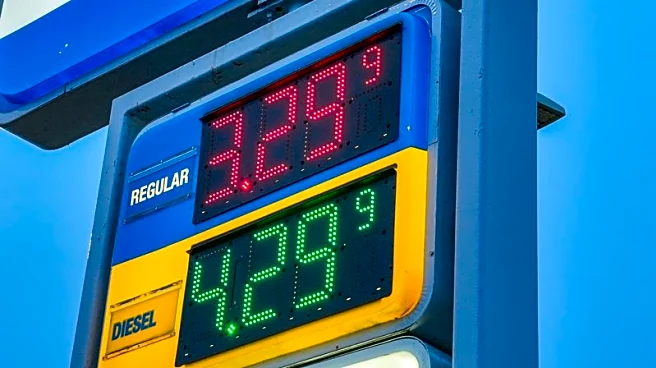
investors reacting negatively and stock markets declining. Additionally, President Trump's recent military actions against Iran have led to disruptions in oil production and shipping, causing gas prices to rise significantly. The average price of gas in the U.S. has increased by 11% in the past week, reaching $3.32 per gallon, the highest during Trump's presidency.
Why It's Important?
The economic developments pose significant political and economic challenges for President Trump, who has previously touted a 'golden age' for the American economy. The job losses and rising gas prices could undermine public confidence in the administration's economic policies and impact consumer spending. The situation also highlights the interconnectedness of global events and domestic economic conditions, as geopolitical tensions can have direct consequences on the U.S. economy. The rising cost of oil and potential supply chain disruptions could lead to increased prices for goods and services, affecting both businesses and consumers.
What's Next?
The administration may need to address these economic challenges through policy measures aimed at stabilizing the job market and managing the impact of rising oil prices. This could involve diplomatic efforts to de-escalate tensions with Iran and measures to support affected industries and workers. The situation will likely be a focal point in political discourse, with potential implications for upcoming elections. Economic stakeholders, including businesses and consumers, will be closely monitoring developments and adjusting their strategies in response to the evolving economic landscape.