






What's Happening?
The Associated Press Stylebook recently issued a clarification stating that "Artificial intelligence systems do not think, feel, want or understand," and advised against using language that attributes human characteristics to AI. This directive, shared
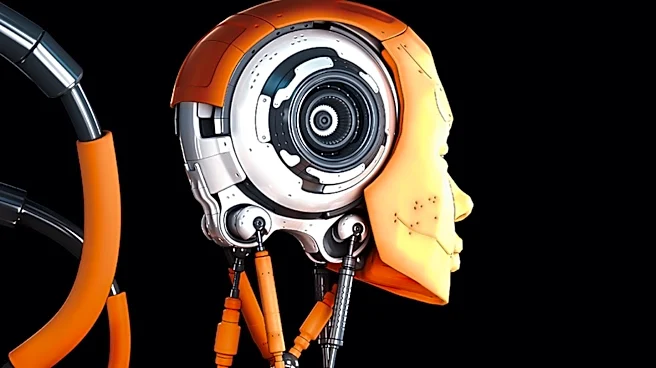
on X, aims to prevent anthropomorphizing AI. The clarification has generated significant pushback from some AI experts and adherents. Henry Shevlin, a philosopher and AI ethicist at Google DeepMind, criticized the AP for what he perceived as hypocrisy, noting that an AP movie review anthropomorphized Optimus Prime from 'Transformers.' Dean Ball, OpenAI’s head of strategic futures, also expressed indignation, arguing that AI systems 'clearly' think and understand, and that the AP's definition of 'think' is flawed if it excludes entities capable of solving complex problems. Alan Rozenshtein of Anthropic questioned the stylebook's role in making 'metaphysical pronouncements.'
Why It's Important?
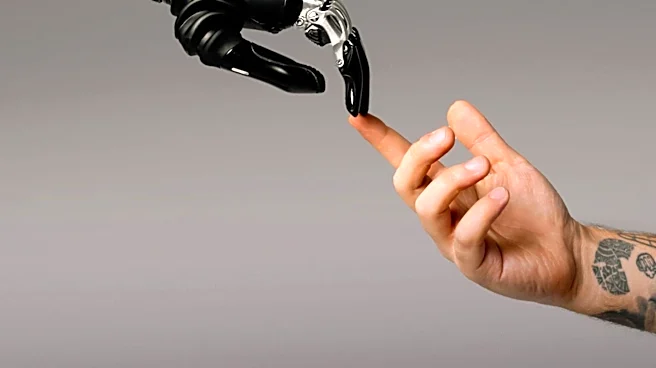
This debate highlights a fundamental tension between journalistic guidelines for clear and accurate language and the evolving understanding and perception of artificial intelligence. The Associated Press's stance reflects a cautious approach to AI, aiming to prevent misleading interpretations of its capabilities and avoid blurring the lines between human and machine intelligence. This is crucial for public discourse, as anthropomorphizing AI can lead to unrealistic expectations, unwarranted fears, or a diminished understanding of AI's actual functions. Conversely, the strong reactions from AI experts underscore the industry's desire for AI to be recognized for its advanced problem-solving abilities, which they argue can be interpreted as forms of 'thinking' or 'understanding.' This disagreement has implications for how AI is reported, discussed, and ultimately integrated into society, influencing public policy, ethical considerations, and the future development of AI technologies. The language used to describe AI can shape public trust and regulatory frameworks.
What's Next?
The Associated Press is likely to maintain its updated style guidelines, reinforcing the importance of precise language when discussing AI. This will continue to influence how news organizations and journalists report on artificial intelligence, promoting a more objective and less anthropomorphic portrayal. However, the debate among AI experts is expected to persist, with ongoing discussions about the nature of AI consciousness, intelligence, and sentience. This could lead to further academic research and philosophical discourse aimed at defining these concepts more rigorously in the context of AI. The industry may also see a continued effort from AI companies and researchers to advocate for a more nuanced understanding of AI's capabilities, potentially through educational initiatives or public engagement campaigns. Ultimately, the ongoing dialogue will contribute to shaping the long-term narrative around AI, influencing how society perceives and interacts with these advanced technologies, and potentially impacting future ethical guidelines and regulatory frameworks.
Beyond the Headlines
The controversy surrounding the Associated Press's AI style guide delves into deeper philosophical questions about the definition of intelligence, consciousness, and what it means to 'think' or 'feel.' It exposes a cultural and scientific divide in how AI is understood and communicated. The pushback from AI experts suggests a concern that overly restrictive language might hinder the recognition of AI's true advancements or even misrepresent its potential. This debate is not merely semantic; it touches upon the very essence of what distinguishes human intelligence from artificial intelligence. The anthropomorphization of AI, even in casual language, can subtly shift societal expectations and ethical considerations, potentially leading to a future where the lines between human and machine are increasingly blurred. This discussion is critical for establishing a responsible framework for AI development and integration, ensuring that technological progress is balanced with a clear understanding of AI's limitations and its fundamental difference from human cognition and emotion.