
What's Happening?
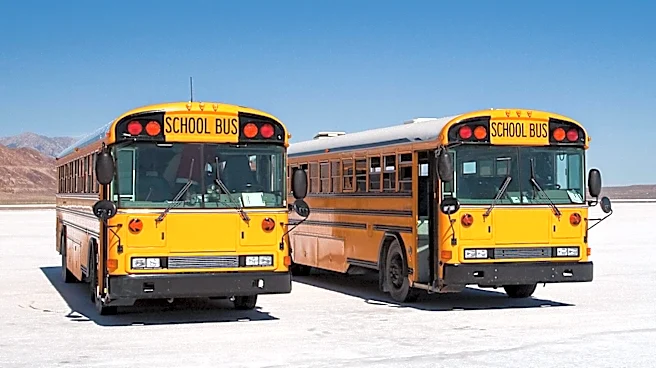
Parents in Berkeley County, South Carolina, are reporting ongoing school bus delays as nearly 40,000 students returned to schools last week. The Berkeley County School District has acknowledged that not
all students are arriving at class on time, attributing the delays to a bus driver shortage and unexpected call-outs. The district began the academic year with 27 bus driver vacancies. Parents, who use a bus app for pickup time updates, are receiving delay notifications that are often inexact and do not specify the bus number, with some indicating arrival windows of 60 to 90 minutes. Isoraida Lorenzo Duncan, a mother of four, stated she has contacted the district eight times, and her middle schooler has not been able to ride the bus to school at all this year due to the delays. She highlighted the difficulty for parents with multiple children to drop them off themselves, especially when both parents work. The district has stated that drivers are in place for regular routes, but recent delays stem from last-minute staffing gaps, illness, and other unexpected absences.
Why It's Important?
The persistent school bus delays in Berkeley County highlight a significant operational challenge impacting student attendance, parental routines, and potentially academic performance. A shortage of bus drivers is a widespread issue affecting school districts across the U.S., leading to disruptions in daily school operations. For students, consistent delays can result in missed instructional time, particularly for those who arrive late to school regularly. For parents, these delays create considerable logistical burdens, forcing them to adjust work schedules, arrange alternative transportation, or face the difficult choice of their children missing school. The ripple effect described by parents, where delays for one route impact subsequent routes, exacerbates the problem. This situation also underscores the critical role of reliable transportation in ensuring equitable access to education, especially for families where personal transportation is not a viable option. The district's efforts to address the shortage, such as training more drivers, are crucial for restoring stability to the transportation system.
What's Next?
The Berkeley County School District is actively working to mitigate the bus driver shortage and improve the consistency of its transportation services. More drivers are currently undergoing training, and efforts are underway to increase substitute driver coverage. Until these new drivers complete their training and additional substitutes are in place, some drivers may continue to operate double routes as needed, which could perpetuate some delays. Transportation leadership within the district is reviewing how same-day absences and unexpected staffing changes are managed, including the deployment of substitute and relief drivers and how routes are prioritized. The district also has an open posting for a temporary bus driver trainee, indicating ongoing recruitment efforts. Parents are hoping for more consistent and accurate pickup windows in the immediate future. The effectiveness of these measures will determine how quickly the district can resolve the current transportation challenges and provide reliable service for its students.
Beyond the Headlines
The bus driver shortage in Berkeley County is indicative of a larger national trend impacting various sectors, including education. This issue often stems from a combination of factors such as competitive wages in other industries, an aging workforce, and the demanding nature of the job, which includes split shifts and responsibility for children's safety. The reliance on a bus app for updates, while a technological advancement, also reveals the limitations of current communication strategies when real-time information is inconsistent or vague. This situation can lead to increased stress for families and a potential decline in trust between the community and the school district. Addressing this challenge effectively requires not only recruitment and training but also a reevaluation of compensation, benefits, and working conditions for bus drivers. Furthermore, it may necessitate a broader community discussion on how to support essential service roles and ensure that critical infrastructure, like school transportation, remains robust and reliable for future generations.