
What's Happening?
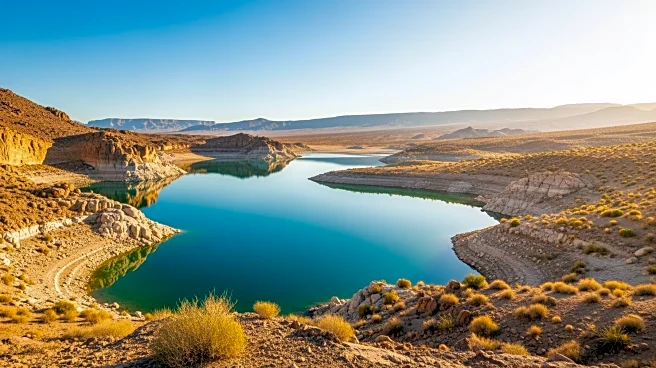
Lake Manly, a once massive body of water in Death Valley, has reappeared following months of intense rainfall, marking the wettest fall on record for the area. The lake, which was formed during the Ice
Ages, had evaporated over time, leaving behind salt flats. Recent precipitation, including a record-breaking 1.76 inches in November, has filled the basin enough for the lake to reemerge, drawing tourists and photographers to the area. The lake's return has increased local tourism by 20 to 30 percent, benefiting businesses like the Death Valley Inn. However, the sudden influx of water has also caused logistical challenges, with road closures due to flood debris.
Why It's Important?
The reappearance of Lake Manly highlights the impact of climate variability on natural landscapes and local economies. The increased tourism provides a financial boost to local businesses, demonstrating the economic potential of natural attractions. However, the logistical challenges posed by the sudden water influx underscore the need for infrastructure resilience in the face of extreme weather events. The event also raises awareness about the historical and environmental significance of Death Valley, potentially influencing future conservation efforts.
What's Next?
The future of Lake Manly depends on weather conditions, with cooler temperatures potentially extending its presence. Park officials are monitoring the situation, as the lake's presence could lead to a superbloom in spring, attracting even more visitors. However, the lake may vanish again if conditions change. The National Park Service continues to manage road closures and visitor safety, emphasizing the need for caution in affected areas.
Beyond the Headlines
The reemergence of Lake Manly serves as a reminder of the dynamic nature of desert ecosystems and the historical shifts in climate that have shaped them. It also highlights the potential for natural phenomena to drive economic activity and cultural interest, prompting discussions about sustainable tourism and environmental stewardship in sensitive areas like Death Valley.