






What's Happening?
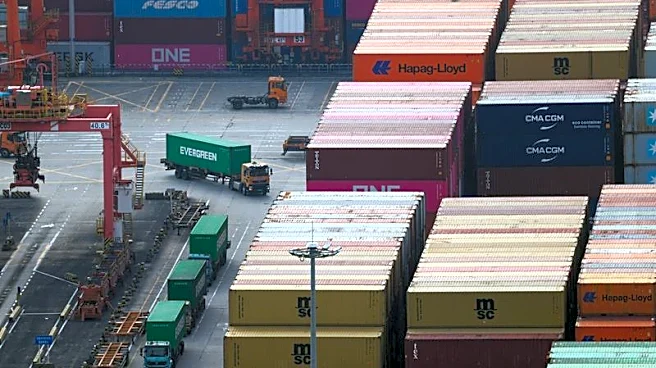
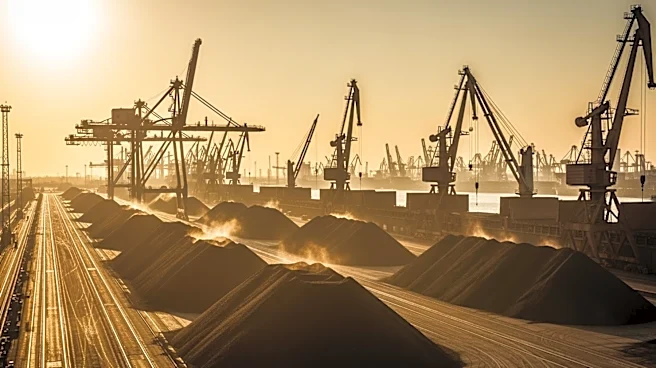
China has reported a significant increase in its imports of iron-ore and coal for the first quarter of the year, according to customs data cited by Reuters. Iron-ore imports rose by 11.5% year-on-year in March, reaching 104.7 million tons, driven by larger
shipments from Australia and seasonal restocking by steelmakers. This increase is part of a broader quarterly rise of 10.5%, totaling 314.7 million tons. Conversely, China's steel exports decreased by 12.6% in March and 9.9% year-on-year for the quarter. Meanwhile, coal imports increased by 1% year-on-year in March to 39 million tons, with a quarterly rise of 1.3% to 116 million tons. However, imports of unwrought copper and copper products fell by 10.9% year-on-year in March, with a quarterly decline of 14.2%.
Why It's Important?
China's import patterns are crucial for global commodity markets, influencing prices and supply chains worldwide. The increase in iron-ore and coal imports suggests a robust demand for these resources, potentially driving up global prices. This demand is likely fueled by China's industrial activities and infrastructure projects, which require substantial raw materials. The decrease in steel exports could indicate a shift towards domestic consumption, affecting international steel markets. The decline in copper imports might reflect changes in China's manufacturing sector or adjustments in its supply chain strategies. These shifts can have significant implications for countries that export these commodities to China, impacting their economies and trade balances.
What's Next?
The trends in China's import activities could lead to strategic adjustments by global commodity producers and exporters. Countries like Australia, which supply significant amounts of iron-ore and coal to China, may benefit from increased demand. However, they must also navigate potential geopolitical tensions and trade policies that could affect future exports. The decrease in copper imports might prompt copper-producing countries to seek alternative markets or adjust production levels. Additionally, global commodity markets will closely monitor China's economic policies and industrial activities, as these will continue to influence import patterns and global supply chains.