



What's Happening?
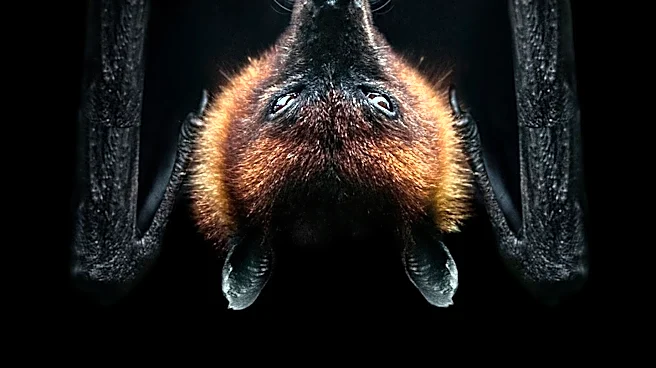
Vampire bats demonstrate a sophisticated system of reciprocal altruism, where they regurgitate blood to feed starving roost-mates, even those they are not related to, and remember who has helped them in the past. This behavior, studied over four decades
by researchers like Gerald Wilkinson and Gerald Carter, challenges the notion that such generosity is solely driven by kinship. A 2013 study in Proceedings of the Royal Society B found that blood previously received from a partner was 8.5 times more predictive of future donations than genetic relatedness, with 64% of sharing pairs being unrelated. Vampire bats have a fragile energy budget, as blood is watery and provides little stored energy, making two consecutive nights without feeding potentially fatal. This vulnerability makes blood sharing a critical survival mechanism. Researchers have observed that bats initiate sharing more often than hungry bats solicit it, and they build trust by starting with low-risk investments like grooming before escalating to costly food donations.
Why It's Important?
This research provides compelling evidence of complex social intelligence and 'favor economy' in the animal kingdom, moving beyond simple instinctual behaviors. It highlights that memory and a form of social accounting play a significant role in the survival and social structure of vampire bat colonies. The findings have implications for understanding the evolution of cooperation and altruism, not just in animals but also in human societies. By demonstrating that non-kin individuals engage in costly reciprocal acts, the study challenges purely genetic explanations for altruism and emphasizes the importance of social learning and individual recognition. This understanding can inform broader ecological and behavioral studies, offering insights into how species adapt to harsh environments through social strategies. The ability of bats to remember past interactions and weigh future generosity based on those experiences suggests a level of cognitive complexity that is rarely attributed to non-primate species.
What's Next?
Future research will likely continue to explore the nuances of vampire bat social dynamics, including how they coordinate their hunting and sharing behaviors in the wild. Studies using proximity sensors have already shown that captive partnerships persist in natural roosts and even during foraging, suggesting a deeper level of social bonding. Further investigation into the cognitive mechanisms underlying their memory and decision-making processes for reciprocity could provide more insights into animal intelligence. Researchers may also examine whether environmental factors or population densities influence the prevalence and patterns of reciprocal altruism. The findings could also inspire comparative studies across other species that exhibit cooperative behaviors, seeking to identify common evolutionary pressures and cognitive underpinnings. Ultimately, this ongoing research aims to build a more comprehensive picture of social evolution and the diverse forms of cooperation found in nature.
Beyond the Headlines
The intricate social system of vampire bats offers a powerful analogy for human cooperation and the development of social norms. The concept of a 'favor economy,' where generosity today creates a debt for tomorrow, resonates deeply with human social contracts and the building of trust within communities. This research challenges anthropocentric views of complex social behaviors, demonstrating that sophisticated forms of reciprocity can evolve in unexpected places. Ethically, it prompts reflection on the fundamental drivers of altruism and whether our own 'moral vocabulary' for gratitude and debt is merely a more elaborate version of what occurs in the animal world. Culturally, the image of bats remembering past favors and building relationships based on mutual aid provides a compelling narrative about the power of cooperation, even in a species often associated with fear. It underscores the interconnectedness of life and the diverse strategies species employ to thrive.