


What's Happening?
The Federal Emergency Management Agency (FEMA) has committed over $75.5 million in new federal funding for disaster recovery and reconstruction efforts across Puerto Rico. This announcement, made by Governor Jenniffer González Colón, targets critical
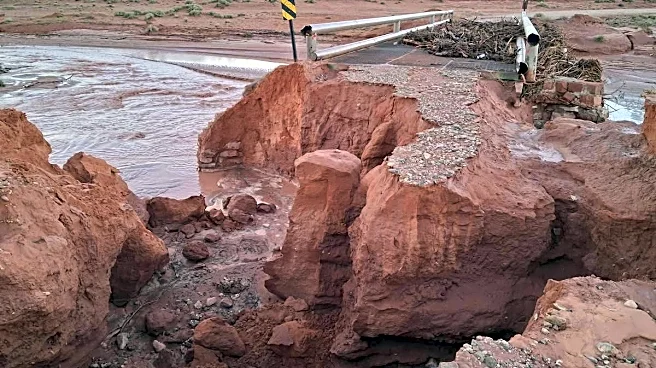
infrastructure including public housing, schools, roads, coastal stabilization projects, and electrical systems. These areas sustained damage from multiple natural disasters, specifically Hurricane Maria, the southwestern earthquakes, Hurricane Fiona, and Tropical Storm Ernesto. Significant allocations include nearly $14 million for rehabilitating residential buildings in Caguas, $7.7 million for road repairs in Barranquitas, and over $7.2 million for administrative costs incurred by the Puerto Rico Department of Education following the earthquakes. Additionally, the funding package supports the electrical grid with approximately $1.6 million for distribution feeder reconstruction in Sabana Grande and includes projects for cultural and community facilities, such as the restoration of the Juan 'Pachín' Vicéns Auditorium in Ponce.
Why It's Important?
This substantial federal investment is crucial for Puerto Rico's ongoing recovery and resilience against future natural disasters. The allocation of funds to public housing will directly improve living conditions for residents, while investments in schools aim to provide safer educational environments, particularly by strengthening them against seismic events. Repairing and upgrading roads and electrical infrastructure are vital for economic stability and daily life, ensuring better connectivity and reliable power. Coastal stabilization projects, such as those in Loíza’s Paseo del Atlántico, are essential for protecting communities from future storm damage, which is a recurring threat to the island. The funding also addresses the long-term impacts of multiple past disasters, demonstrating a continued commitment to rebuilding and modernizing the island's essential services and infrastructure, which is critical for the well-being and economic recovery of its citizens.
What's Next?
The obligated funds will now be directed towards the specified projects, with the Puerto Rico Federal Affairs Administration Executive Director Gabriella Boffelli indicating that this funding reflects ongoing coordination between Puerto Rico and federal agencies to advance high-priority recovery initiatives. The Public Housing Administration will oversee the rehabilitation of numerous residential buildings, while the Department of Education will continue to manage administrative costs related to earthquake recovery. Road and electrical infrastructure projects will proceed, aiming to restore and enhance these critical systems. The focus will be on the efficient execution of these projects to ensure that the intended benefits, such as improved housing, safer schools, and a more resilient infrastructure, are realized. Continued monitoring and oversight will be necessary to ensure that the funds are utilized effectively and that the reconstruction efforts meet the established goals for disaster recovery and mitigation.
Beyond the Headlines
The continuous federal funding for Puerto Rico's disaster recovery highlights the profound and long-lasting impact of natural disasters on island territories, often exacerbating existing socio-economic vulnerabilities. Beyond the immediate repairs, these investments represent an opportunity to implement more resilient and sustainable infrastructure, potentially setting new standards for disaster preparedness and response in similar regions. The focus on strengthening schools against seismic events and coastal stabilization projects reflects a proactive approach to mitigate future risks, moving beyond mere reconstruction to building back better. This ongoing commitment also underscores the complex relationship between federal agencies and territorial governments in managing large-scale recovery efforts, emphasizing the need for sustained collaboration and resource allocation to address the unique challenges faced by communities repeatedly affected by climate-related events and geological hazards.