





What's Happening?
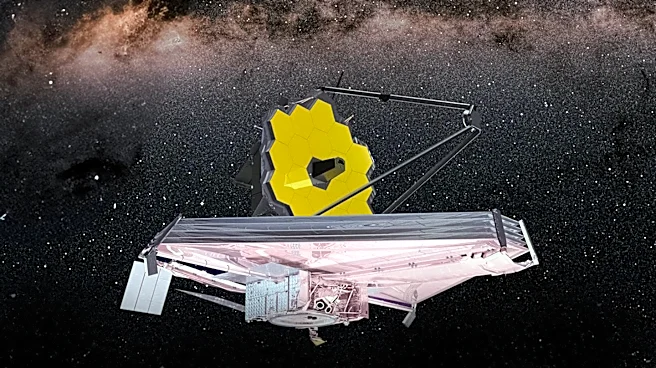
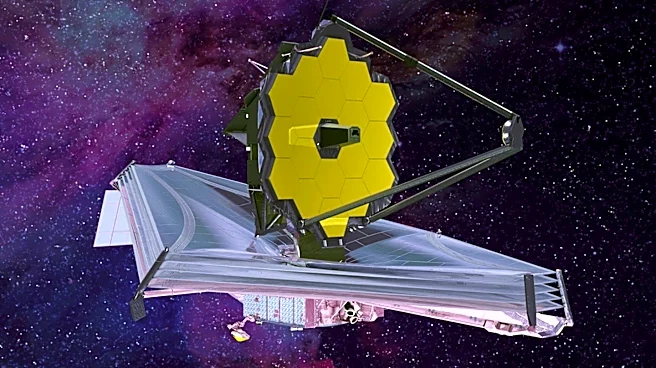
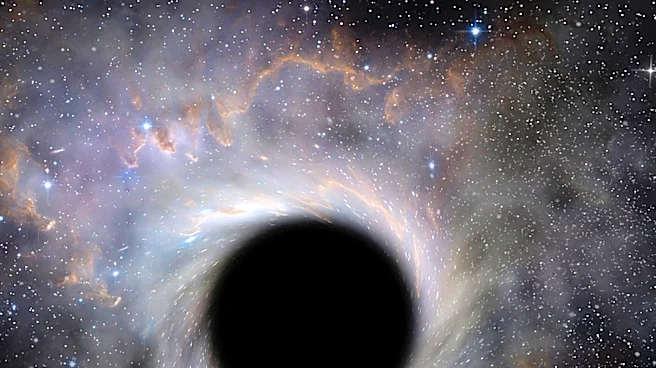
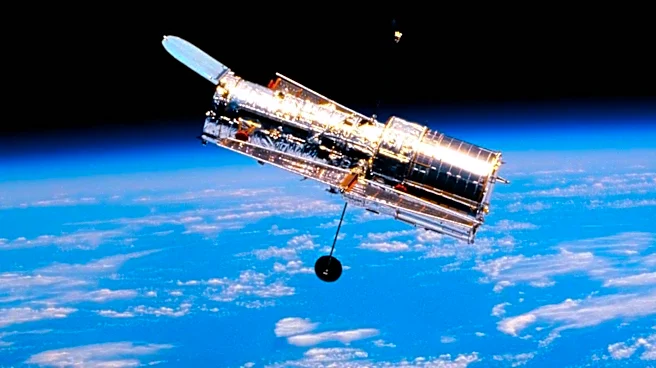
Astronomers have identified the first stellar-mass black hole in the globular cluster Omega Centauri using data from NASA's Hubble and James Webb Space Telescopes. This discovery, published in The Astrophysical Journal Letters, was achieved by tracking
the motion of a star over two decades, revealing a black hole designated oMEGACat BH-2. The finding provides the first direct evidence of the cluster's predicted population of stellar-mass black holes, which had previously eluded detection through traditional methods like X-ray and radio signal searches.
Why It's Important?
The discovery of a stellar-mass black hole in Omega Centauri is a significant breakthrough in astrophysics, offering new insights into the formation and evolution of black holes in dense stellar environments. This finding challenges existing models of black hole formation, particularly in metal-poor environments like Omega Centauri. It also enhances our understanding of globular cluster dynamics and the role of black holes in these systems, potentially informing future research and observations in the field.
What's Next?
The identification of oMEGACat BH-2 opens the door for further exploration of Omega Centauri's black hole population. Continued observations with Hubble, Webb, and future telescopes like the Nancy Grace Roman Space Telescope are expected to uncover more black holes in the cluster, providing valuable data to refine models of black hole formation and cluster evolution. These efforts will contribute to a deeper understanding of the universe's most enigmatic objects and their impact on their surrounding environments.