







What's Happening?
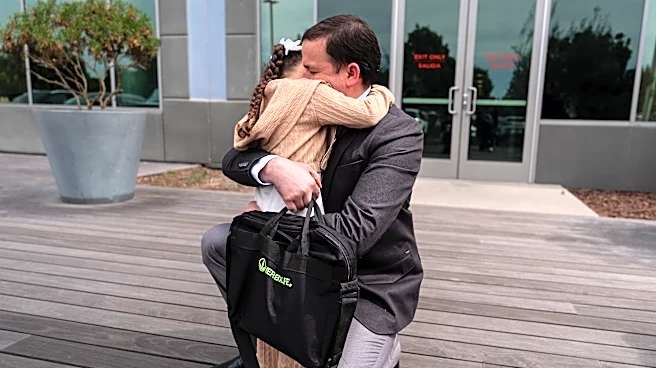
A groundbreaking remote robotic surgery was successfully conducted by Dr. Vipul Patel, the medical director of the Global Robotic Institute at Advent Health in Orlando, Florida. The procedure involved a patient in Angola diagnosed with prostate cancer,
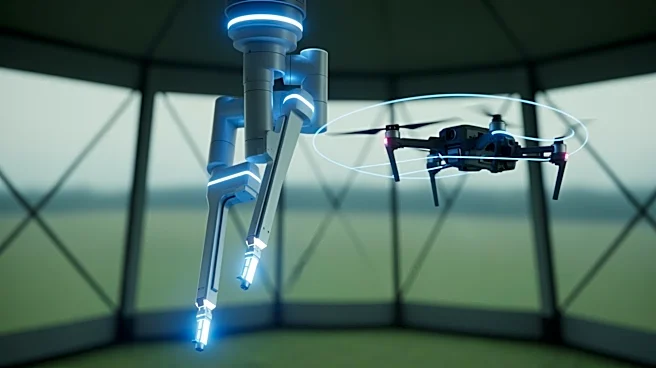
with Dr. Patel operating from 7,000 miles away. This surgery is part of a human clinical trial approved by the U.S. Food and Drug Administration to test the feasibility of transcontinental robotic telesurgery. The use of a multimillion-dollar robotic system allowed for a less invasive and more precise procedure, which typically results in faster recovery times. The trial aims to explore the potential of such technology to provide surgical care in underserved areas globally and in rural parts of the U.S.
Why It's Important?
This development represents a significant advancement in medical technology, potentially transforming access to surgical care. By enabling surgeons to operate remotely, this technology could address healthcare disparities in underserved regions, offering high-quality surgical interventions without the need for patients to travel long distances. In the U.S., it could enhance medical training and emergency response capabilities, allowing for remote guidance and intervention in critical situations. The success of this trial could pave the way for broader adoption of remote robotic surgeries, improving healthcare outcomes and accessibility worldwide.
What's Next?
Dr. Patel plans to submit the data from this surgery to the FDA for review, with the hope of conducting more telesurgeries in the future. The trial's success could lead to further development and refinement of remote surgical technologies, potentially expanding their use in various medical fields. Stakeholders in healthcare and technology sectors may closely monitor these developments, considering the implications for global health systems and the potential for new markets in medical technology.