









What's Happening?
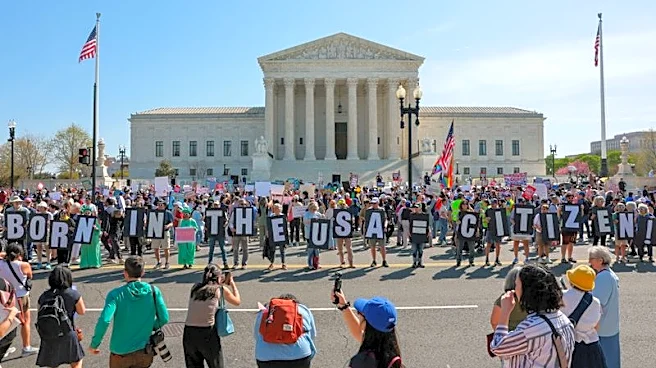
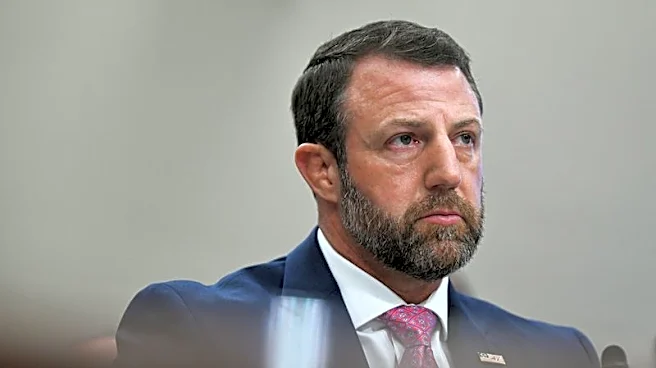
Markwayne Mullin, the Secretary of Homeland Security, has announced that migrants in the United States under Temporary Protected Status (TPS) must either apply for permanent residency or prepare to leave the country. This directive follows a recent Supreme
Court decision that removed humanitarian protections for hundreds of thousands of immigrants. Mullin emphasized that TPS is not a permanent solution and offered assistance for those choosing to return to their home countries, including a plane ticket and financial aid. The Supreme Court's ruling affects approximately 350,000 Haitian and 6,000 Syrian immigrants, who now face potential detention or deportation by Immigration and Customs Enforcement (ICE). TPS was initially granted to Haitians after the 2010 earthquake and to Syrians following the onset of civil war in 2012.
Why It's Important?
The Supreme Court's decision and the subsequent directive from the Department of Homeland Security have significant implications for the affected immigrant communities. The removal of TPS protections could lead to increased deportations, impacting families and communities that have established roots in the U.S. This development also highlights the ongoing debate over immigration policy and the balance between humanitarian considerations and legal immigration frameworks. The decision may strain U.S. relations with countries like Haiti and Syria, as well as impact domestic political dynamics, particularly among lawmakers and advocacy groups focused on immigration reform.
What's Next?
As the Department of Homeland Security implements this policy, affected migrants will need to decide whether to pursue permanent residency or return to their countries of origin. Legal and advocacy groups are likely to challenge the decision, seeking to protect the rights of those under TPS. The U.S. government may face increased pressure to provide clear pathways to citizenship for long-term residents. Additionally, the political discourse around immigration is expected to intensify, with potential legislative proposals aimed at addressing the status of TPS holders.