









What's Happening?
India is deepening its engagement with Afghanistan, focusing on agricultural cooperation as a strategic tool for diplomacy. This development follows the visit of Afghanistan's Agriculture Minister Mawlawi Ataullah Omari to New Delhi, marking the fourth
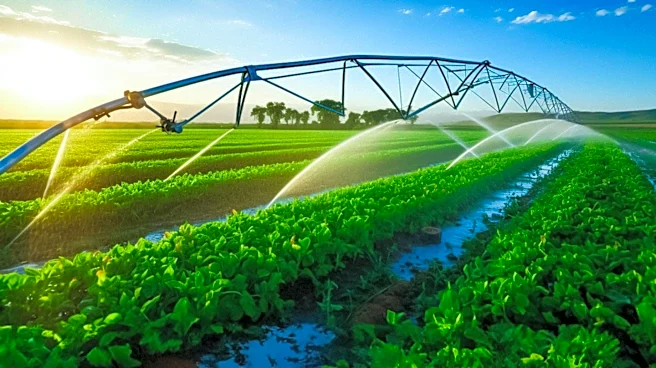
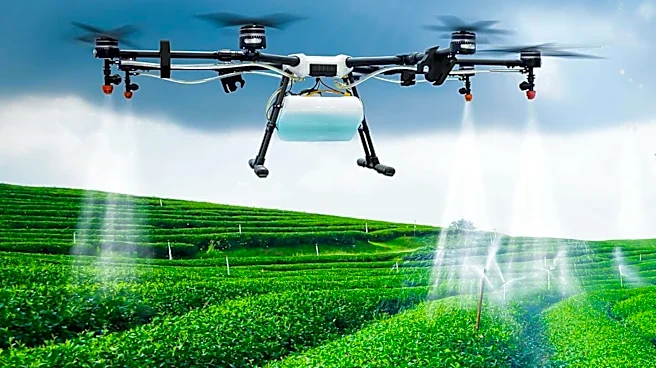
ministerial-level visit from Kabul since October 2025. During the visit, Omari met with India's Union Agriculture Minister Shivraj Singh Chouhan to discuss ongoing cooperation and explore new avenues in agriculture, irrigation, livestock, and agri-trade. The discussions emphasized food security, seed systems, and crop productivity, with India committing to support Afghanistan's agricultural sector through climate-resilient practices and sustainable irrigation. This engagement reflects India's pragmatic approach to maintaining communication with Kabul, despite the complex political realities following the Taliban's return to power.
Why It's Important?
India's expanding engagement with Afghanistan is significant for several reasons. Firstly, it underscores India's strategic interest in maintaining influence in Afghanistan, a region with critical geopolitical importance due to its location as a bridge between South Asia, Central Asia, and the Middle East. By fostering agricultural cooperation, India aims to support Afghanistan's self-reliance, reducing its vulnerability to instability and extremism. This engagement also aligns with India's broader regional strategy to counterbalance the influence of Pakistan, China, and other regional powers. Additionally, a stable Afghanistan enhances prospects for connectivity initiatives like the Chabahar Port and the International North-South Transport Corridor, which are crucial for India's access to Central Asian markets.
What's Next?
India is likely to continue its strategic engagement with Afghanistan, focusing on sectors that can foster stability and development. The ongoing cooperation in agriculture may expand to include other areas such as education and infrastructure, further strengthening bilateral ties. India's approach will likely involve balancing humanitarian assistance with strategic interests, ensuring that Afghanistan does not become a base for anti-India activities. The evolving geopolitical landscape, with competing influences from regional powers, will require India to navigate its relationship with Afghanistan carefully, maintaining open channels of communication with the Taliban while safeguarding its national security interests.