







What's Happening?
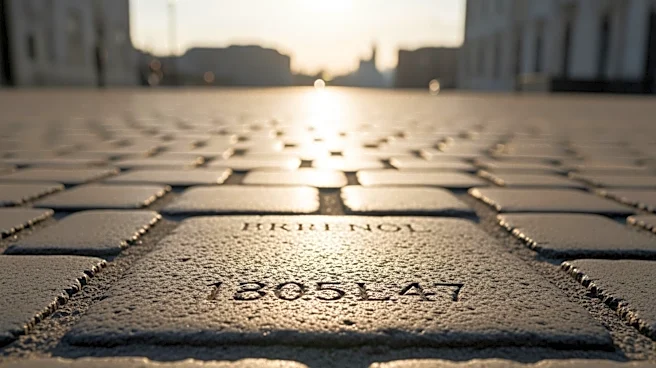
Artist Gunter Demnig has been placing Stolpersteine, or 'stumbling blocks,' across Berlin to honor Holocaust victims. These brass plaques are embedded in sidewalks and mark the last known residences of individuals who were deported and murdered during
the Holocaust. Demnig's initiative began in 1992 in Cologne and has since expanded to over 126,000 stones across Germany and 31 other countries. The Stolpersteine serve as a decentralized memorial, prompting passersby to pause and reflect on the lives lost. The project has become a grassroots movement, with local communities researching and commemorating victims from their areas.
Why It's Important?
The Stolpersteine project is significant as it personalizes the memory of Holocaust victims, bringing history into everyday life. It serves as a poignant reminder of the atrocities committed and the importance of remembering the past to prevent future occurrences. The initiative also fosters community involvement and education, as residents engage in historical research and participate in memorial ceremonies. In a time when antisemitism and far-right ideologies are resurging, such memorials play a crucial role in promoting awareness and tolerance.
What's Next?
As the Stolpersteine project continues to grow, more communities are expected to participate in researching and commemorating local Holocaust victims. This ongoing effort may lead to increased educational programs and collaborations with schools and historical societies. The project also highlights the need for continued vigilance against antisemitism and the importance of preserving historical memory in the face of rising extremism.
Beyond the Headlines
The Stolpersteine serve not only as memorials but also as educational tools that engage younger generations in learning about the Holocaust. By involving students in the research and installation process, the project helps instill a sense of responsibility and awareness about historical injustices. Additionally, the decentralized nature of the memorials challenges traditional notions of how history is commemorated, emphasizing personal stories over grand monuments.