



What's Happening?
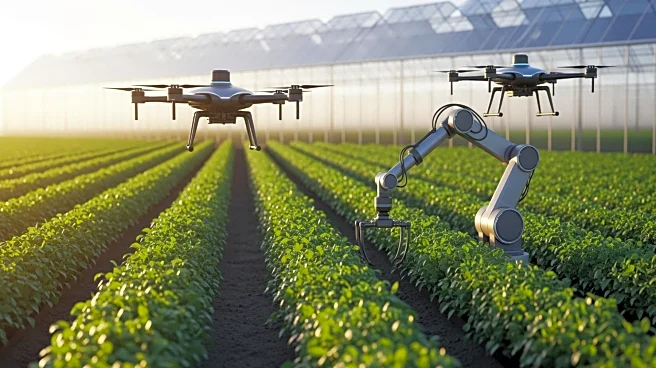
China is transforming its agricultural sector through the integration of advanced technologies such as drones, autonomous tractors, and artificial intelligence. These innovations are enabling precise navigation, real-time monitoring, and targeted application
of inputs, significantly enhancing productivity and efficiency. The use of sensors and digital platforms allows for continuous surveillance and data-driven decision-making, reducing waste and improving consistency in production. This technological leap is redefining the future of food production, positioning China as a leader in digital agriculture and precision mechanization.
Why It's Important?
China's advancements in agricultural technology have the potential to influence global food production practices and set new standards for efficiency and sustainability. By reducing reliance on manual labor and optimizing resource use, these technologies can help address challenges such as labor shortages and environmental impact. The shift towards precision agriculture could lead to increased yields and reduced costs, benefiting both producers and consumers. As other countries observe China's progress, there may be increased interest in adopting similar technologies to enhance their own agricultural sectors.
Beyond the Headlines
The integration of AI and automation in agriculture raises questions about the future role of human labor in farming. While these technologies offer efficiency gains, they also require significant investment and infrastructure development. The ethical implications of reduced human involvement and the potential for job displacement must be considered. Additionally, the reliance on data-driven systems highlights the importance of cybersecurity and data privacy in the agricultural sector.