






What's Happening?
AriBio, a South Korean pharmaceutical company, has announced promising results from a Phase 3 clinical trial for its drug AR1001, which is designed to slow the progression of Alzheimer's disease. The drug, a phosphodiesterase-5 inhibitor similar to Viagra,
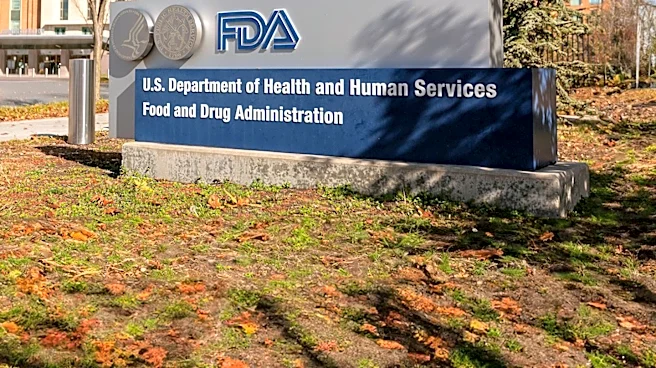
demonstrated a 31% reduction in cognitive decline over one year in patients with early Alzheimer's who were not receiving other treatments. The trial, which spanned 13 countries and included 604 participants in this specific subgroup, presented its findings at the Clinical Trials on Alzheimer's Disease conference in Boston. AR1001 works by relaxing blood vessels and increasing blood flow to the brain, and it also appears to directly stimulate pathways in brain cells that promote learning and memory. While the results are encouraging for patients not on other Alzheimer's medications, the drug did not achieve statistically significant results in a wider group of patients who were also taking other Alzheimer's drugs. AriBio plans to seek FDA approval for AR1001 in 2027.
Why It's Important?
The potential approval of AR1001 could mark a significant advancement in Alzheimer's treatment options, particularly as it is an oral, once-daily pill, offering a more convenient alternative to existing intravenous treatments like Donanemab and Lecanemab. This could improve patient adherence and accessibility to disease-modifying therapies. The drug's novel approach, which focuses on improving blood flow and brain cell function rather than solely targeting amyloid plaques, could also open new avenues for research and development in Alzheimer's treatment. If approved, AR1001 would provide another tool for healthcare providers to manage early-stage Alzheimer's, potentially slowing the progression of cognitive decline and improving the quality of life for affected individuals and their families. The differentiation in efficacy between patients on and off other Alzheimer's medications highlights the complexity of the disease and the need for personalized treatment strategies.
What's Next?
AriBio intends to apply for FDA approval for AR1001 in 2027, which will initiate a rigorous review process by U.S. regulatory bodies. Further trials and scrutiny by the scientific community will be necessary to fully understand the drug's long-term efficacy, safety profile, and optimal patient population, especially concerning its interaction with other Alzheimer's medications. If approved, AR1001 would enter the U.S. market as a new oral treatment option for early Alzheimer's disease. This could lead to increased competition in the Alzheimer's drug market and potentially drive down costs or spur further innovation. Healthcare providers will need to assess how AR1001 integrates into existing treatment paradigms and identify which patients would benefit most from this new therapy, particularly given the observed differences in efficacy based on concomitant medication use.
Beyond the Headlines
The development of AR1001 underscores a broader shift in Alzheimer's research, moving beyond solely targeting amyloid plaques to exploring other biological pathways, such as vascular health and neuronal function. The connection between erectile dysfunction drugs and cognitive health highlights the intricate interplay between different physiological systems and could inspire further investigation into repurposing existing medications for neurological disorders. Ethically, the availability of more treatment options, especially oral ones, raises questions about equitable access and affordability for all patients. The varying efficacy based on concurrent medications also emphasizes the need for more sophisticated diagnostic tools and personalized medicine approaches to tailor treatments to individual patient profiles, ensuring that patients receive the most effective and appropriate care for their specific condition.