


What's Happening?
A report by the consumer advocacy group Public Citizen indicates that the Trump administration has appointed a record number of officials with personal fortunes of at least $100 million. The report, released on Monday, states that 57 Trump administration officials meet
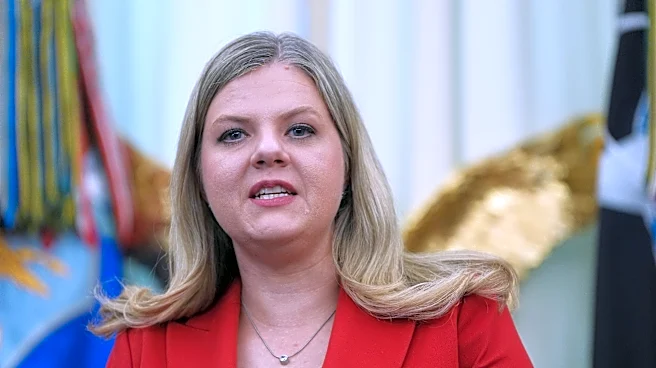
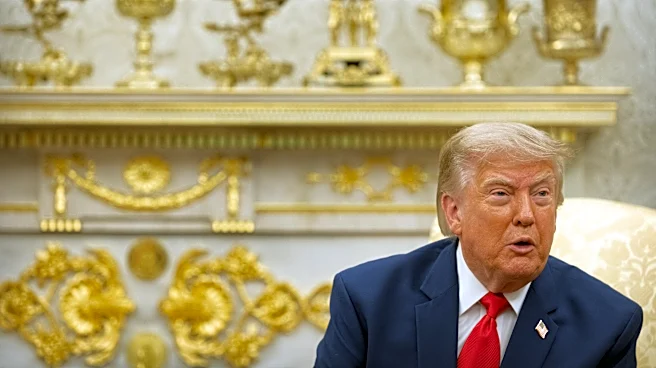
this criterion, which is more than four times the combined total of the three preceding administrations (George W. Bush, Barack Obama, and Joe Biden). This figure includes 40 high-level executive branch officials and 17 ambassadors. Notably, eight of the 23 cabinet members, including Secretary of Commerce Howard Lutnick and Secretary of Education Linda McMahon, are billionaires. President Trump, himself a billionaire, has publicly defended his preference for appointing wealthy individuals, citing their financial success as a testament to their competence and business acumen.
Why It's Important?
This unprecedented concentration of wealth within the Trump administration raises significant questions about potential conflicts of interest and the influence of private financial interests on public policy. Critics, such as Lisa Gilbert, co-president of Public Citizen, argue that a government largely composed of the ultra-rich creates 'perverse incentives and corruption,' leading to concerns about whose interests are truly being served. While presidents have historically appointed wealthy individuals to advisory and leadership roles, the sheer number in the current administration is seen as a departure from norms. This situation could lead to policies that disproportionately benefit the wealthy, such as tax cuts and deregulation, potentially exacerbating economic inequality and undermining public trust in government impartiality. The contrast between President Trump's populist appeal to middle and working-class Americans and the composition of his administration highlights a potential disconnect between his rhetoric and the practical implications of his appointments.
What's Next?
The Public Citizen report is likely to fuel ongoing debates about ethics in government and the role of wealth in political appointments. As the Trump administration continues, scrutiny over potential conflicts of interest for these wealthy officials will likely intensify. Advocacy groups and the media will continue to monitor policy decisions, particularly those related to economic regulation, taxation, and industry-specific issues, to identify any patterns that might suggest undue influence. The issue could also become a talking point in future political campaigns, with opponents highlighting the administration's composition as evidence of a government out of touch with the concerns of average Americans. Furthermore, there may be calls for stricter ethics regulations or greater transparency regarding the financial holdings and potential conflicts of interest of high-ranking government officials.
Beyond the Headlines
Beyond the immediate concerns of conflicts of interest, the high concentration of wealthy individuals in the Trump administration could have deeper implications for the perception of democratic governance. It raises questions about the accessibility of public service to individuals from diverse socioeconomic backgrounds and whether financial success is being prioritized over other forms of expertise or public service experience. This trend could further entrench the idea that political power is intertwined with economic power, potentially eroding public confidence in the fairness and representativeness of government. The administration's defense of these appointments, framing financial success as a qualification for leadership, also contributes to a broader cultural narrative about meritocracy and the value placed on different forms of achievement in public life. This could influence future political appointments and the types of leaders society comes to expect in government roles.