






What's Happening?
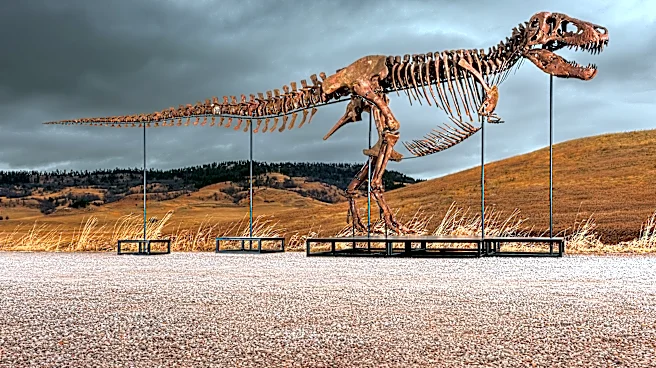
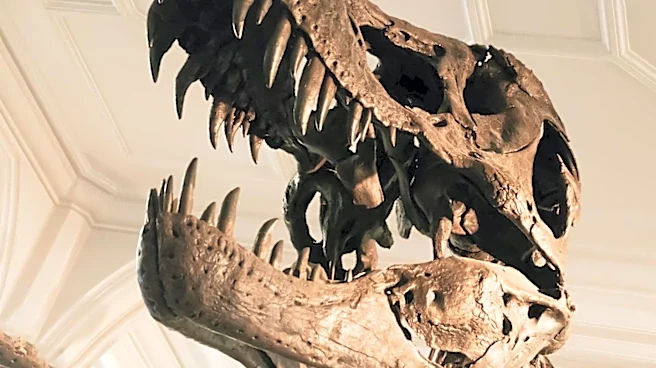
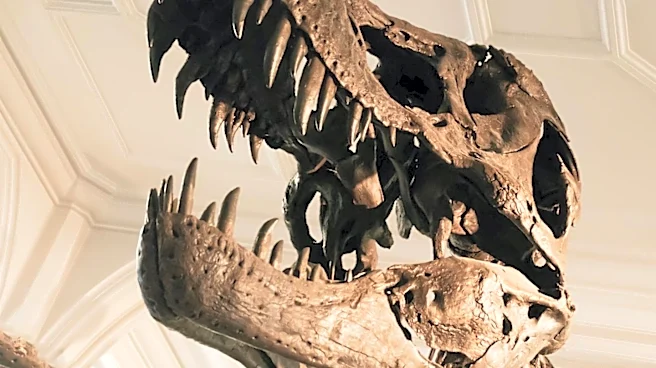
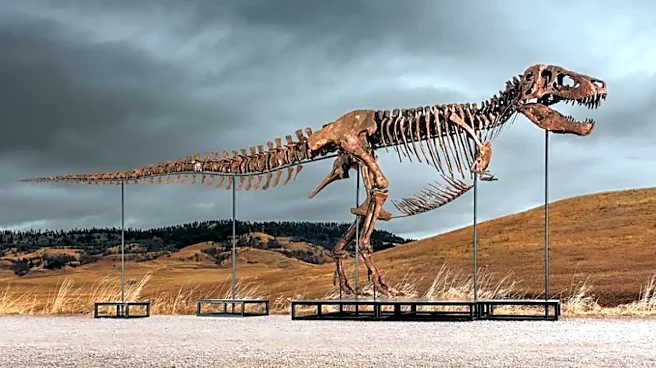
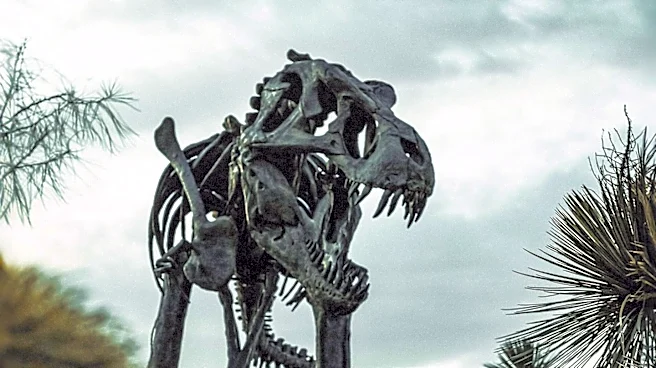
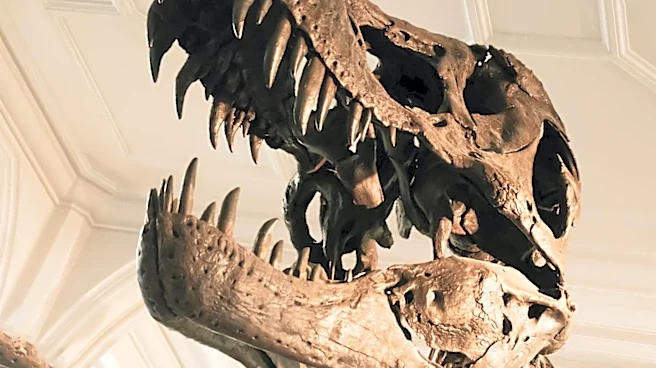
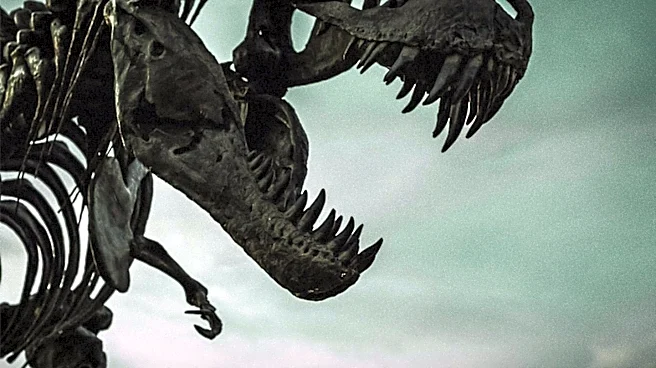
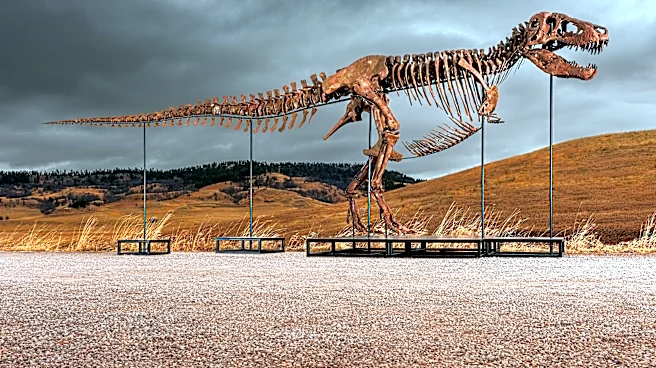
A Tyrannosaurus rex skeleton, known as 'Gus', has been sold for a record-breaking $50.1 million at Sotheby's in New York. This sale marks the highest price ever paid for a dinosaur fossil at auction, surpassing the previous record held by a Stegosaurus
skeleton sold for $44.6 million in 2024. The auction involved a competitive 10-minute bidding war among seven bidders, ultimately concluding with an anonymous buyer. 'Gus' was discovered in 2021 on a South Dakota cattle ranch owned by the late Gary 'Gus' Licking, after whom the fossil is named. The skeleton is notable for its size and completeness, measuring 38 feet in length and dating back 67 million years to the Late Cretaceous period.
Why It's Important?
The sale of 'Gus' highlights the growing market and interest in dinosaur fossils, particularly among private collectors. While the auction sets a new financial benchmark, it also raises concerns within the scientific community about the accessibility of such significant specimens for research and public education. The private ownership of major fossil specimens can limit scientific study and public display, potentially hindering educational opportunities and scientific advancements. This trend underscores the tension between commercial interests and scientific priorities in the field of paleontology.
What's Next?
The record-breaking sale of 'Gus' may encourage further fossil discoveries and auctions, potentially driving up prices and interest in the market. However, it also prompts discussions about the ethical implications of private fossil ownership. Scientists and museums may advocate for policies that ensure significant fossils remain accessible for research and public education. The outcome of these discussions could influence future fossil auctions and the availability of such specimens for scientific study.
Beyond the Headlines
The sale of 'Gus' could have long-term implications for the preservation and study of paleontological finds. As private collectors acquire more significant fossils, museums and educational institutions may face challenges in securing important specimens for public display and research. This trend could lead to increased collaboration between private collectors and scientific institutions to ensure that fossils are studied and appreciated by the public. Additionally, the high-profile nature of such auctions may inspire greater public interest in paleontology and natural history.