




What's Happening?
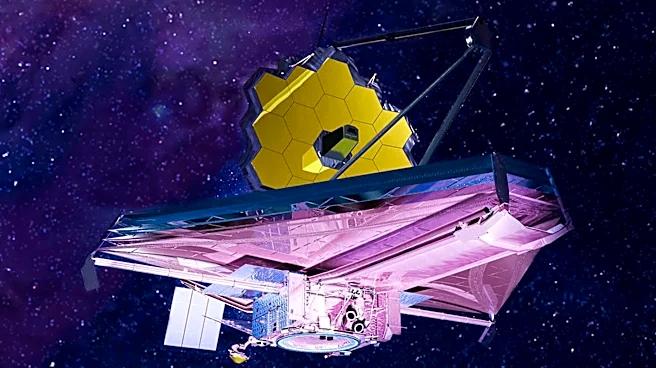
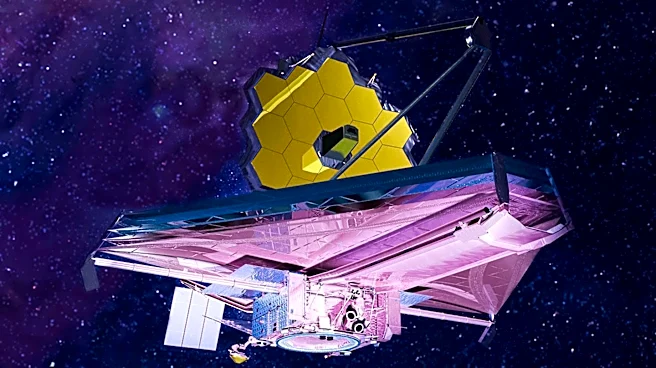
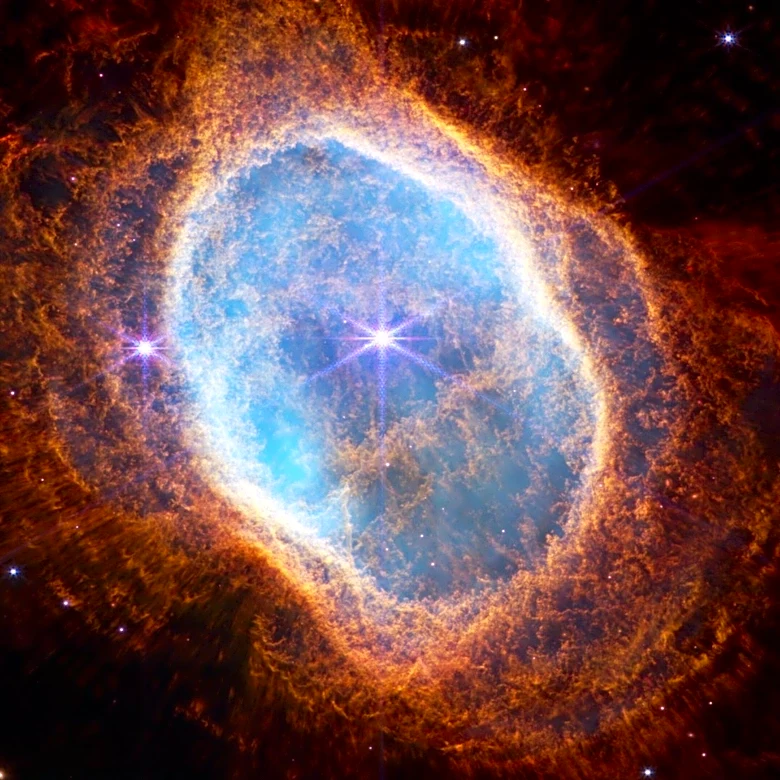
Astronomers utilizing the Chandra X-ray Observatory (CXO) and the James Webb Space Telescope (JWST) have identified a previously unseen, ghostly cloud within the Carina Nebula. This cloud, initially appearing isolated, is actively engaged in the formation
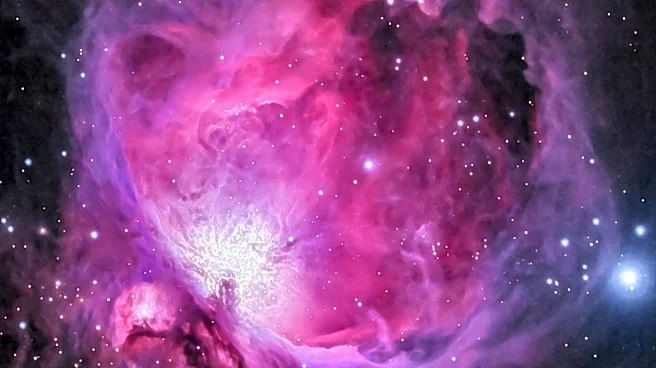
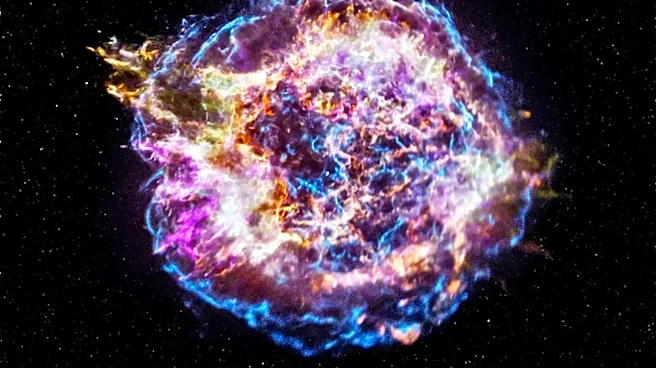
of new, hot, and young stars. The Carina Nebula, located over 7,500 light-years away, is a vast region known for its intense star formation. The discovery was made by observing the region in both X-ray and infrared light, allowing scientists to analyze the cloud's structure and the stars it has produced. This particular cloud is being shaped and eroded by ionizing radiation from the nearby Eta Carina binary system and other hot, young stars, leading to the formation of comet-like 'knots' within its structure. The Eta Carina binary, a highly luminous system, is a significant feature of the nebula, and its primary star is expected to explode as a supernova in the future.
Why It's Important?
This discovery is crucial for enhancing our understanding of star formation processes within large nebulae. By studying this active stellar nursery, astronomers gain insights into how massive stars influence their environments through radiation and stellar winds, shaping molecular clouds and potentially triggering further star birth. The complementary data from the CXO and JWST provides a comprehensive view, revealing details about the cloud's composition and the early stages of stellar evolution that would be impossible to observe with a single instrument. Understanding these processes is fundamental to comprehending the life cycles of stars and the evolution of galaxies. The Carina Nebula, with its dynamic environment and the impending supernova of Eta Carina, serves as a natural laboratory for these studies, offering clues about the origins of stellar systems, including our own.
What's Next?
Future observations will likely focus on further characterizing the newly discovered stellar nursery and its interaction with the surrounding Carina Nebula. Astronomers will continue to monitor the Eta Carina binary for signs of its eventual supernova, which is expected to dramatically alter the nebula's landscape and potentially trigger new rounds of star formation. The data collected from this region will be used to refine models of stellar evolution and star birth, particularly in environments dominated by massive, short-lived stars. Continued use of advanced telescopes like JWST and CXO will provide more detailed spectral and imaging data, allowing for a deeper understanding of the chemical composition and physical conditions within these star-forming regions. This ongoing research will contribute to a more complete picture of how stars are born and how they impact their cosmic neighborhoods.
Beyond the Headlines
The identification of this 'ghostly' cloud highlights the continuous, dynamic nature of the universe, where seemingly isolated phenomena are often deeply interconnected with larger cosmic processes. The erosion of the cloud by intense radiation, leading to 'cometary globules,' illustrates the destructive yet creative forces at play in star-forming regions. This interplay of creation and destruction is a fundamental aspect of cosmic evolution, where the death of old stars provides the raw materials for new ones. The Carina Nebula, with its rich history of stellar outbursts and ongoing star birth, serves as a powerful reminder of the universe's constant transformation. The insights gained from such studies not only advance astrophysics but also deepen our philosophical understanding of our place within the vast and ever-changing cosmos, emphasizing the cyclical nature of matter and energy in the universe.