




What's Happening?
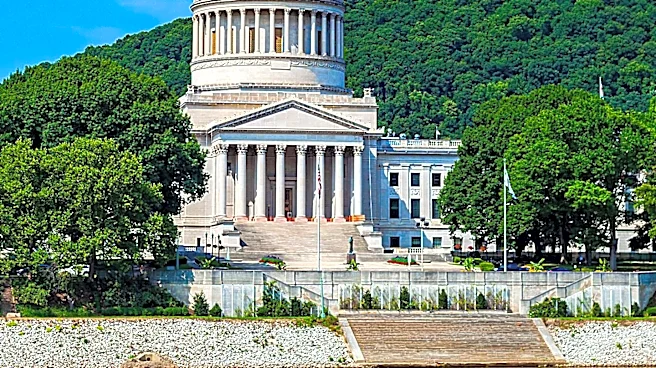
Two individuals have died as a result of flash floods in West Virginia, following torrential rains last week. The governor's office, through communications director Lars Dalseide, confirmed the fatalities but did not provide details on the victims' identities
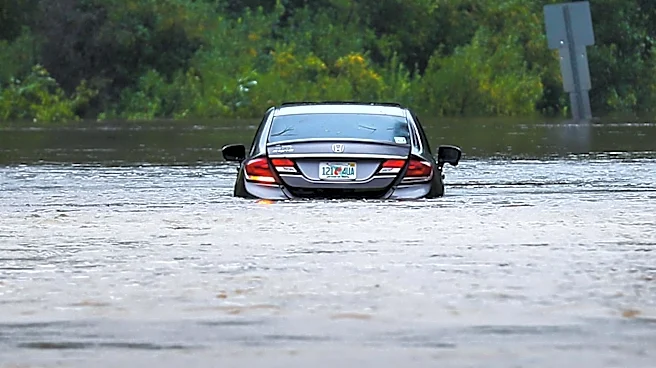
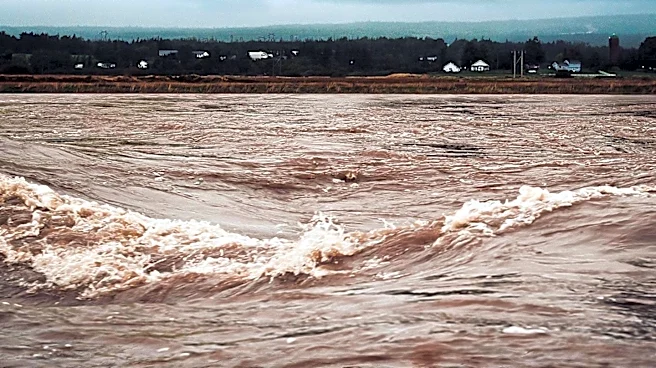
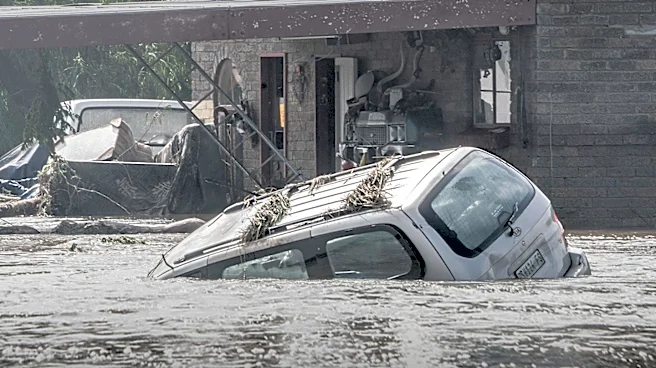
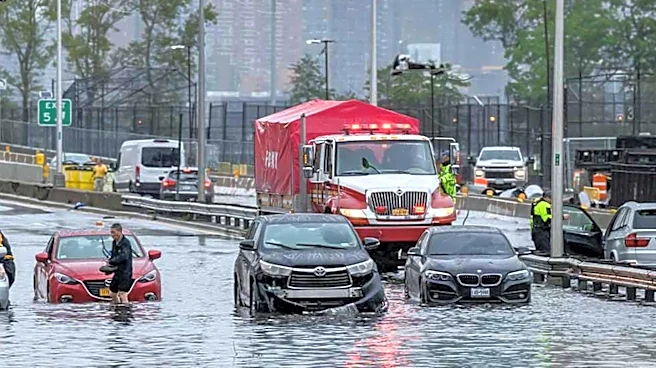
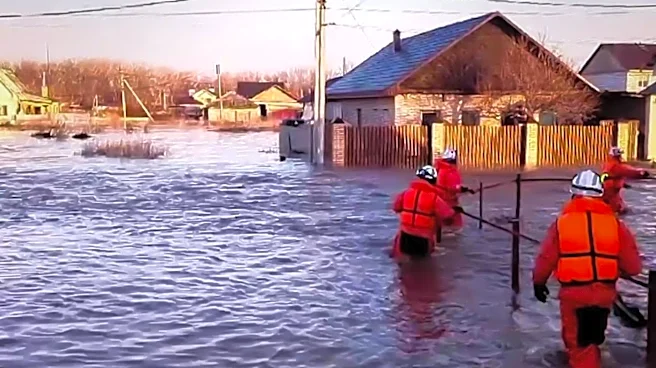
or the exact circumstances of their deaths. The floods, which saw up to 7 inches of rain in some areas, have been described as extensive, with significant damage reported in north-central West Virginia. Videos and photos on social media depicted submerged vehicles and inundated buildings, including a Walmart and a hotel. Rescue operations were necessary for dozens of people trapped in their vehicles, and some areas were initially inaccessible due to the floodwaters.
Why It's Important?
The flash floods in West Virginia highlight the increasing frequency and severity of extreme weather events, which pose significant challenges to infrastructure and emergency response systems. The loss of life underscores the urgent need for improved flood management and preparedness strategies. The economic impact is also considerable, with damage to businesses and homes likely to result in substantial financial losses. This event may prompt state and local governments to reassess their disaster response plans and infrastructure resilience, potentially leading to policy changes aimed at mitigating future risks.
What's Next?
In the aftermath of the flooding, state and local authorities are expected to conduct assessments to determine the full extent of the damage and identify areas in need of immediate assistance. Recovery efforts will likely involve coordination between government agencies, emergency services, and community organizations to provide relief to affected residents. There may also be discussions on long-term strategies to enhance flood resilience, including infrastructure upgrades and improved early warning systems. The state government may seek federal assistance to support recovery and rebuilding efforts.