




What's Happening?
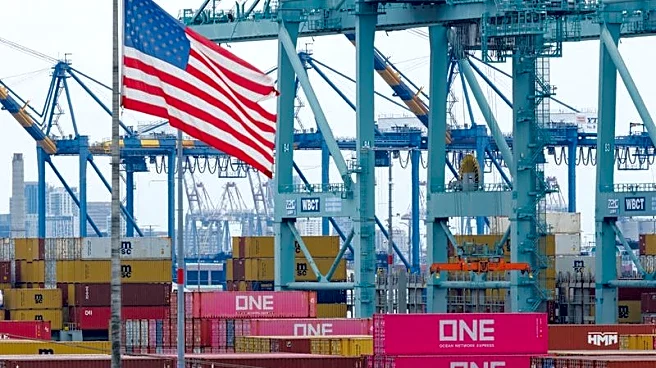
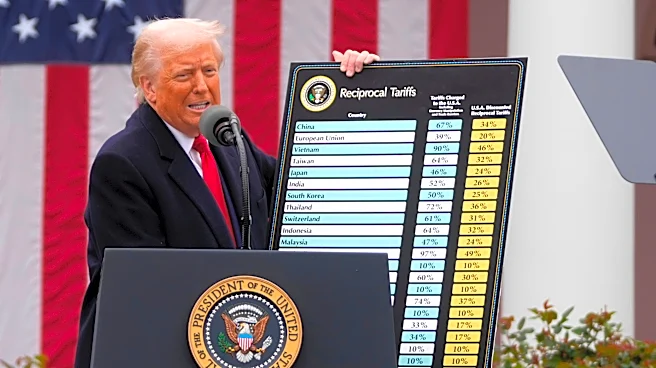
The Trump administration has introduced a new set of tariffs to replace those previously invalidated by the Supreme Court. These tariffs, which took effect as a prior round expired, are aimed at addressing forced labor issues and will apply to 59 countries
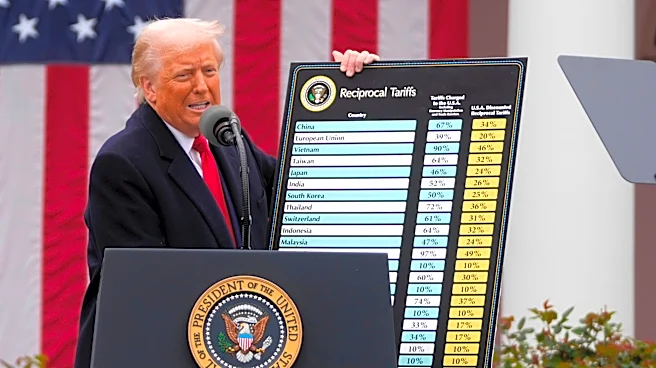
and the European Union. The tariffs, set at 10% for countries with bans on forced labor and 12.5% for those without, are part of a broader strategy under Section 301 of the Trade Act of 1974. This move follows investigations into manufacturing practices and is distinct from the global levies previously struck down.
Why It's Important?
The introduction of these tariffs is significant as it reflects ongoing trade tensions and the U.S. government's approach to addressing forced labor in global supply chains. The tariffs could impact international trade relations and economic dynamics, particularly affecting countries that rely heavily on exports to the U.S. The decision underscores the administration's commitment to using trade policy as a tool for enforcing labor standards, which could lead to increased costs for importers and potentially higher prices for consumers.
What's Next?
The tariffs are expected to remain in place indefinitely, with potential for further legal challenges or adjustments based on international negotiations. The U.S. Trade Representative is also working on potential interim agreements to replace the US-Mexico-Canada Agreement, which could influence future trade policies. Stakeholders, including businesses and foreign governments, may respond with their own measures or seek diplomatic solutions to mitigate the impact of these tariffs.