







What's Happening?
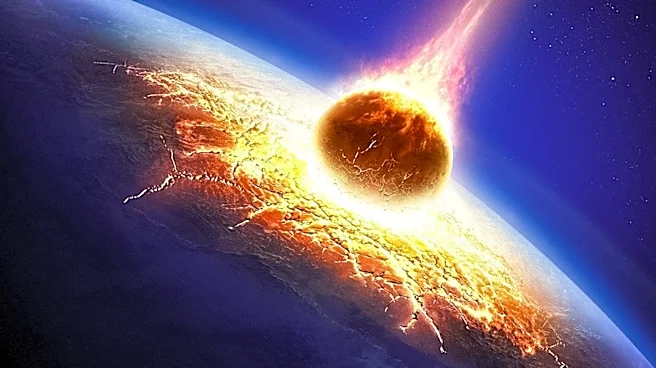
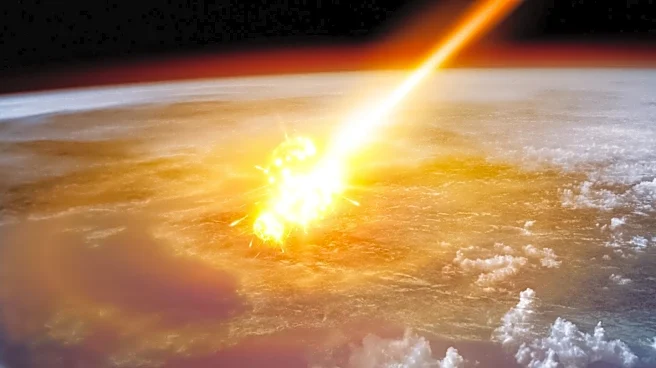
Researchers from the University of British Columbia, Paris, Brussels, and Vienna have identified a rare type of meteorite, known as a CO chondrite, as the likely cause of the mass extinction event that occurred 66 million years ago. This event led to
the extinction of approximately 75% of all species, including non-avian dinosaurs. The study, published in Science Advances, involved analyzing nickel isotopes in material left by the Cretaceous-Paleogene impact. CO chondrites are distinct from typical meteorites due to their lower content of volatile elements like sulfur. This finding suggests that the sulfur from the meteorite itself may not have been the primary cause of the extinction. Instead, the fine debris ejected into the atmosphere likely played a more significant role in the global catastrophe.
Why It's Important?
The identification of the CO chondrite as the impactor provides new insights into the events that led to one of Earth's most significant extinction events. Understanding the composition of the meteorite helps scientists refine their theories about the mechanisms of the extinction, particularly the role of atmospheric debris. This research not only enhances our knowledge of Earth's geological history but also informs current studies on planetary defense and the potential impacts of future asteroid collisions. The rarity of CO chondrites underscores the unique circumstances that led to the extinction, highlighting the vulnerability of life on Earth to extraterrestrial events.
What's Next?
Future research may focus on tracing the origins of the CO chondrite to better understand the dynamics of the solar system and the distribution of such rare meteorites. Scientists may also continue to study the Chicxulub crater and other impact sites to gather more data on the effects of large-scale impacts. This research could contribute to developing strategies for mitigating the risks of potential future impacts on Earth.
Beyond the Headlines
The study of the CO chondrite impactor also raises questions about the broader implications of rare celestial events on Earth's history. It highlights the importance of interdisciplinary research in geology, astronomy, and planetary science to unravel complex historical events. Additionally, it prompts discussions on the preparedness of modern society to respond to similar threats, emphasizing the need for international collaboration in space monitoring and defense initiatives.