



What's Happening?
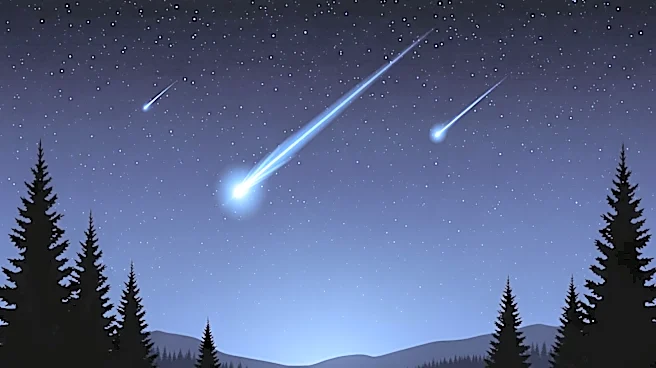
The Lyrid meteor shower is reaching its peak, providing a celestial spectacle for early risers. The shower's radiant, located near the bright star Vega in the constellation Lyra, will be high in the eastern sky before dawn. Observers can expect to see
up to 20 meteors per hour under optimal conditions, with the best viewing time occurring after the moon sets around 1:30 A.M. local daylight time. The meteors, which travel at speeds of approximately 30 miles per second, originate from dust particles shed by Comet C/1861 G1 (Thatcher). This annual event is a highlight for stargazers, as the lack of moonlight this year enhances visibility.
Why It's Important?
The Lyrid meteor shower is one of the oldest known meteor showers, with records dating back over 2,700 years. It provides an opportunity for both amateur and professional astronomers to observe and study meteoric activity. The event also serves as a reminder of the dynamic nature of our solar system and the ongoing interactions between celestial bodies. For the general public, it offers a chance to connect with the night sky and appreciate the natural wonders beyond our planet. Such events can inspire interest in astronomy and science, fostering a greater understanding of our universe.
What's Next?
Following the peak of the Lyrid meteor shower, skywatchers can look forward to other astronomical events throughout the year. The next major meteor shower, the Eta Aquarids, is expected to peak in early May. Additionally, the alignment of the Moon and Jupiter in the constellation Gemini offers another viewing opportunity for enthusiasts. As the year progresses, various celestial events will continue to captivate and educate those interested in astronomy.