



What's Happening?
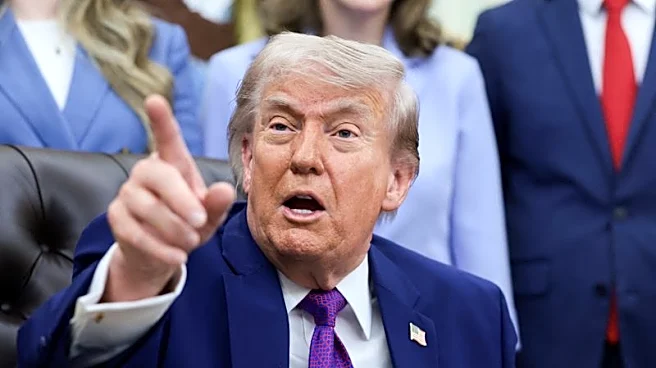
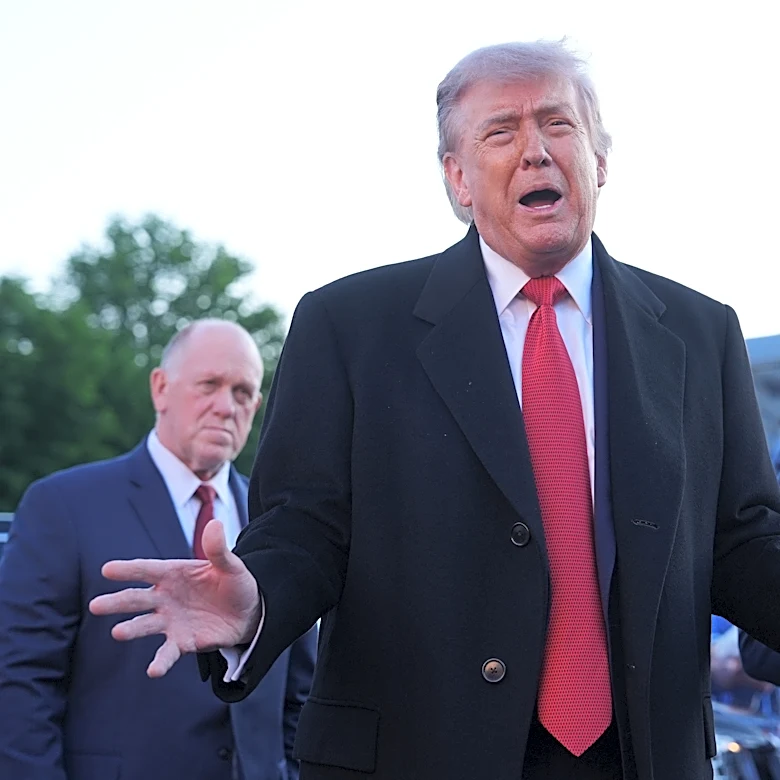
Democratic voters are increasingly adopting a confrontational stance towards the Republican Party, a significant shift from previous preferences for compromise. This change is largely attributed to President Trump's return to the White House and his continued
influence on American politics. In March 2025, a poll by NBC News revealed that 65% of self-identified Democrats preferred their representatives to maintain their positions even at the risk of legislative gridlock, a stark contrast to the 59% who favored compromise in 2017. This shift reflects a broader trend within the Democratic base, moving away from the conciliatory approach that characterized the Obama and early Biden years. Democratic strategist Rebecca Katz noted that many who believed in a post-Trump Republican 'epiphany' have either retired or lost their positions, indicating a growing acceptance of a more combative political strategy.
Why It's Important?
The shift in Democratic voter attitudes towards a more confrontational approach has significant implications for U.S. politics. It suggests a hardening of partisan lines, potentially leading to increased legislative gridlock and a more polarized political environment. This change could impact the Democratic Party's strategy in upcoming elections, as they may prioritize solidifying their base over reaching across the aisle. The confrontational stance also reflects broader societal divisions, as political discourse becomes more contentious. This development could influence policy-making, as Democrats may focus on rallying their base rather than seeking bipartisan solutions, affecting issues like healthcare, immigration, and economic policy.
What's Next?
As the midterm elections approach, Democrats are likely to continue embracing a confrontational strategy, especially in response to President Trump's influence. This approach may involve supporting candidates who are willing to challenge Republican policies aggressively. The Democratic Party may also explore new strategies in traditionally Republican states, potentially backing independent candidates to counteract the perceived toxicity of the Democratic brand. The outcome of the midterms will be crucial in determining whether this strategy is effective in gaining or maintaining political power. Additionally, the Republican Party faces its own challenges, as they must navigate President Trump's polarizing presence while trying to appeal to independent voters.