





What's Happening?
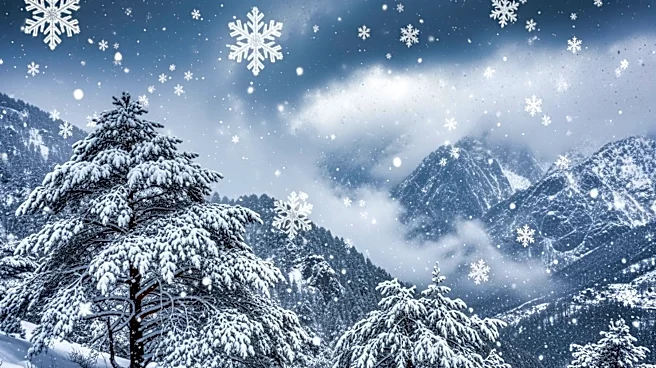
A late-season winter storm is forecasted to bring significant snowfall and hazardous travel conditions to parts of Colorado and New Mexico. The National Weather Service (NWS) has issued multiple winter storm warnings, effective from Thursday through Friday,
particularly affecting mountainous regions. In Colorado, areas such as the Sangre de Cristo Mountains and Pikes Peak are expected to receive between 8 to 16 inches of snow. Similarly, northern New Mexico, including the Sangre de Cristo Mountains and Raton Pass, could see up to 14 inches of snow. The NWS warns that the combination of heavy snowfall and difficult road conditions will likely disrupt travel, especially across higher elevations and mountain passes. Additionally, a winter weather advisory is in place for parts of Alaska, forecasting blowing snow and reduced visibility in high-elevation areas.
Why It's Important?
The heavy snowfall poses significant challenges for residents and travelers in the affected regions. The storm is expected to disrupt daily life by causing road closures, vehicle accidents, and potential power outages. The NWS advises residents to prepare by avoiding nonessential travel, especially over mountain passes, and to equip vehicles with emergency kits. The storm's impact extends beyond immediate travel disruptions, as it could also increase avalanche risks in higher terrains. The advisories highlight the importance of preparedness and caution during severe weather events, emphasizing the need for timely updates and adherence to safety recommendations.
What's Next?
Following the storm, the NWS anticipates a brief period of dry conditions on Saturday in Colorado, with the possibility of additional rain and snow showers starting Sunday. In New Mexico, no further snow is expected after Friday, with any midweek precipitation likely falling as rain. Alaska, however, may experience continued chances of rain and snow through Tuesday, particularly in higher elevations. Residents and travelers are advised to monitor weather updates and prepare for potential changes in conditions.