




What's Happening?
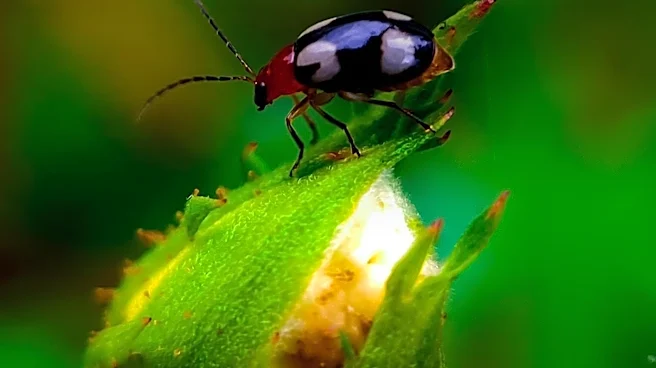
In 2001, scientists introduced the tamarisk leaf beetle to control invasive tamarisk trees in the American Southwest. This action, however, has led to significant habitat loss for the endangered Southwestern Willow Flycatcher. The U.S. Geological Survey
has used satellite mapping to track changes in the bird's habitat, revealing a 94% decline in suitable breeding areas along the lower Virgin River between 2010 and 2015. The beetles, while reducing tamarisk, have exposed flycatcher nests to predators and high temperatures. The report suggests further habitat loss could occur if the beetle continues to spread, with potential declines of 36% along the lower Colorado River and 55% along the upper Gila River. Conservation efforts are focusing on restoring native vegetation and removing tamarisk to mitigate these effects.
Why It's Important?
The introduction of the tamarisk leaf beetle highlights the complex interplay between invasive species management and conservation of native wildlife. The Southwestern Willow Flycatcher, a federally protected species, relies on dense riverside vegetation for breeding. The beetle's impact on tamarisk, while beneficial in some respects, poses a significant threat to the flycatcher's habitat. This situation underscores the need for careful consideration of ecological interventions and their long-term impacts on biodiversity. The findings from the USGS report provide crucial data for land managers to prioritize conservation efforts and protect endangered species effectively.
What's Next?
Conservation agencies are using the satellite mapping data to identify areas most vulnerable to beetle activity and prioritize restoration efforts. This includes removing tamarisk and planting native vegetation. The report's insights will guide future conservation strategies and help agencies meet obligations under the Endangered Species Act. Ongoing monitoring will be essential to assess the effectiveness of these interventions and adapt strategies as needed to ensure the survival of the Southwestern Willow Flycatcher.