







What's Happening?
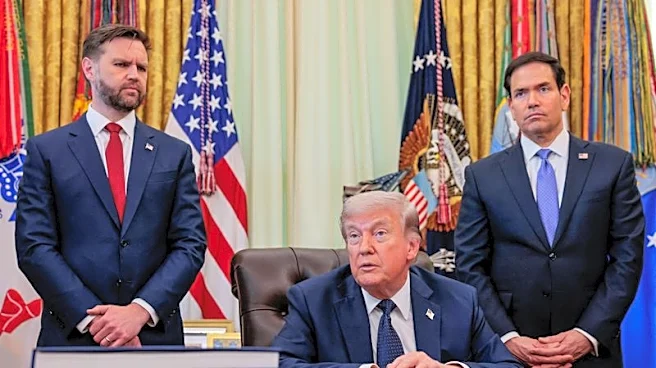
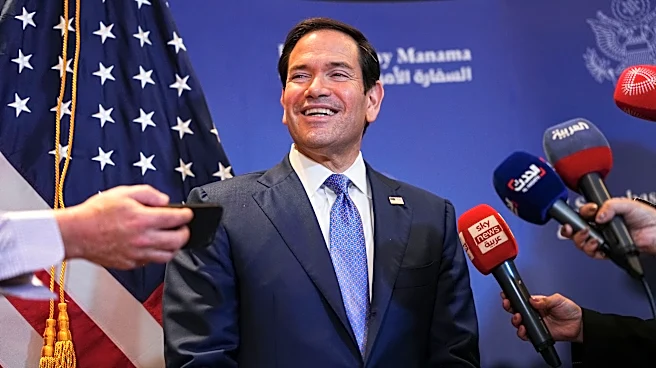
Senator Marco Rubio has expressed a different perspective on the recent memorandum of understanding (MOU) with Iran compared to President Trump and Vice President JD Vance. While President Trump and Vice President Vance have portrayed Iran's leaders as potentially
reformed and rational, Rubio has maintained a critical stance, labeling Iran's leaders as 'radical clerics.' This divergence in messaging comes as Rubio visits Middle Eastern allies to discuss the MOU, which aims to address nuclear and regional security issues. The MOU has been controversial, particularly due to its silence on Iran's missile program and support for proxy groups like Hezbollah and Hamas. Rubio has suggested that the MOU implicitly addresses these concerns, although President Trump has indicated that these issues might be dealt with separately.
Why It's Important?
The differing views within the U.S. administration on the Iran MOU highlight potential challenges in maintaining a unified foreign policy approach. Rubio's critical stance may resonate with conservative foreign policy hawks who are wary of Iran's intentions, while Trump's more conciliatory tone could appeal to those seeking diplomatic solutions. The MOU's handling of Iran's missile program and proxy support is crucial for regional stability, particularly for U.S. allies like Israel. The administration's ability to present a cohesive strategy is vital for securing international support and ensuring the effectiveness of the agreement. The internal disagreements could impact the U.S.'s credibility and influence in the Middle East.
What's Next?
As the U.S. administration continues to navigate the complexities of the Iran MOU, further diplomatic engagements with Middle Eastern allies are expected. Rubio's ongoing discussions in the region may influence the administration's approach to addressing Iran's missile program and proxy activities. The U.S. will need to balance its commitments to allies with the broader goal of regional peace. Additionally, the administration may face pressure to clarify its stance on Iran's leadership and the implications of the MOU. The outcome of these diplomatic efforts will likely shape future U.S. foreign policy in the Middle East.
Beyond the Headlines
The Iran MOU raises broader questions about the U.S.'s role in promoting stability in the Middle East. The agreement's success or failure could influence future diplomatic efforts and the U.S.'s ability to broker peace in other conflict zones. The internal disagreements within the administration also reflect the challenges of crafting a foreign policy that accommodates diverse viewpoints while maintaining strategic coherence. The MOU's handling of Iran's missile program and proxy support could set precedents for how the U.S. addresses similar issues with other nations.