



What's Happening?
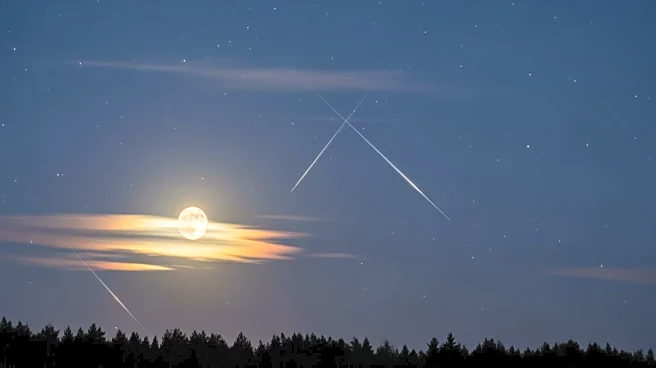
In 2025, the Perseids meteor shower, a favorite annual event for skywatchers in the Northern Hemisphere, was significantly affected by an 84%-illuminated crescent moon. This bright moonlight overshadowed the meteor shower, reducing the visibility of the meteors.
Despite this, there was a brief period of darkness before the peak night on August 12-13, during which a few bright meteors were visible in the predawn hours. NASA photographer Bill Ingalls captured a long exposure of a Perseid meteor in Spruce Knob, West Virginia, about ten days before the peak night. The Perseids are known for their bright meteors and are typically a highlight of the summer skywatching calendar.
Why It's Important?
The Perseids meteor shower is one of the most anticipated astronomical events each year, drawing attention from both amateur and professional astronomers. The impact of the moonlight on the visibility of the meteors highlights the challenges faced by skywatchers in observing celestial events. This situation underscores the importance of optimal viewing conditions, such as minimal light pollution and clear skies, for astronomical observations. The Perseids' diminished visibility in 2025 serves as a reminder of the natural factors that can influence the observation of such events, affecting both public engagement and scientific data collection.
What's Next?
Looking forward, skywatchers and astronomers will continue to prepare for future meteor showers, taking into account factors like moon phases and weather conditions to optimize viewing experiences. The next major meteor shower, the Geminids, will offer another opportunity for observation, provided conditions are favorable. Additionally, advancements in technology and increased public interest in astronomy may lead to more widespread participation in skywatching events, potentially fostering a greater appreciation for celestial phenomena.