




What's Happening?
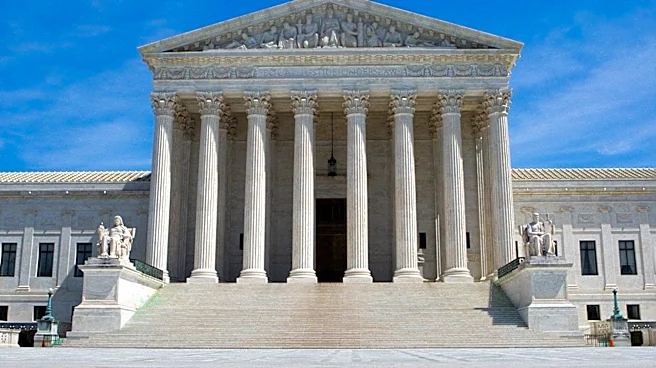
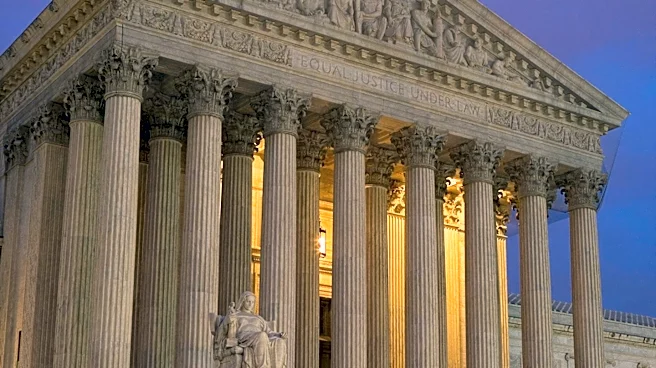
U.S. Supreme Court Justice Neil Gorsuch has voiced concerns regarding a potential ruling in a criminal sentencing case. He fears that if the Supreme Court instructs trial courts to defer to the U.S. Sentencing Commission's interpretation of federal sentencing guidelines,
it could significantly undermine the court's recent dismissal of deference doctrines. According to Law360 Pulse, Justice Gorsuch believes such a ruling would create a 'pretty big hole' in judicial precedent. This issue highlights a notable legal tension within the court, as other justices reportedly do not share Gorsuch's level of concern. The case centers on the extent to which lower courts should defer to administrative agencies' interpretations of laws, a principle that the Supreme Court has recently sought to limit.
Why It's Important?
This development is significant because it touches upon the fundamental principle of judicial deference, particularly as it relates to administrative agencies. Justice Gorsuch, known for his originalist and textualist judicial philosophy, has consistently advocated for limiting the power of administrative agencies and enhancing judicial oversight. A ruling that mandates deference to the U.S. Sentencing Commission could be seen as a step backward from the Supreme Court's recent efforts to curb the 'Chevron deference' doctrine, which previously required courts to defer to agency interpretations of ambiguous statutes. The outcome of this case could therefore have broad implications for how federal courts review agency actions and interpretations across various sectors, potentially shifting power dynamics between the judiciary and the executive branch.
What's Next?
The Supreme Court is expected to continue deliberating on the criminal sentencing case. The central question will be whether the court will uphold or reject the principle of deference to the U.S. Sentencing Commission's interpretations. The decision will likely clarify the extent of judicial deference in the post-Chevron era, particularly concerning federal sentencing guidelines. Legal scholars and practitioners will be closely watching the ruling for its potential impact on future cases involving administrative law and the separation of powers. Depending on the outcome, there could be further legal challenges or legislative efforts to either reinforce or further limit judicial deference to agency interpretations.
Beyond the Headlines
Beyond the immediate legal implications, Justice Gorsuch's concerns reflect a broader philosophical debate within American jurisprudence about the role of the judiciary and the balance of power among governmental branches. His stance aligns with a conservative judicial philosophy that emphasizes strict adherence to the text of laws and the Constitution, aiming to prevent what he views as judicial overreach or the delegation of legislative power to unelected bureaucrats. This case could serve as a bellwether for the Supreme Court's future direction on administrative law, potentially influencing how regulations are interpreted and enforced across the federal government. The long-term impact could be a more assertive judiciary in reviewing agency actions, leading to greater legal certainty but also potentially more challenges to regulatory frameworks.