


What's Happening?
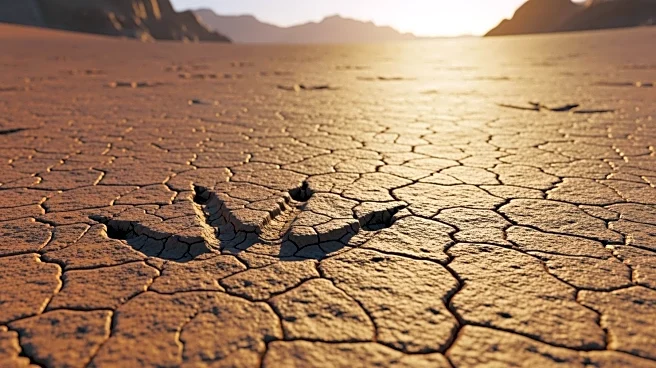
Researchers have uncovered more than 16,000 dinosaur footprints in Torotoro National Park, Bolivia, making it one of the largest dinosaur tracksites ever recorded. These footprints, dating back to the late Cretaceous period, were found on what was once
a prehistoric shoreline. The site, known as Carreras Pampa, reveals that many of the tracks were formed at the edge of water, suggesting that some dinosaurs may have been wading or swimming. The footprints, primarily belonging to theropods, vary in depth and clarity, indicating different speeds and behaviors. This discovery provides valuable insights into the routine movements of dinosaurs, as many tracks align in a similar direction, hinting at repeated movement along the lake's edge.
Why It's Important?
The discovery of these footprints is significant as it offers a rare glimpse into the behavior and environment of dinosaurs during the late Cretaceous period. Unlike fossil bones, which are often scattered, these tracks remain in their original location, providing a more accurate picture of dinosaur behavior. The alignment of the tracks suggests that dinosaurs followed the shoreline, possibly for food or as an easier route, indicating a non-chaotic, routine movement. This finding enhances our understanding of how dinosaurs interacted with their environment, particularly in water landscapes, which is not often revealed through bones alone.
What's Next?
Further research is likely to focus on detailed analysis of the footprints to understand more about the specific species that left them and their behaviors. Scientists may also explore other potential sites in the region to uncover additional tracks, which could provide more comprehensive data on dinosaur movement patterns and environmental interactions. The findings could lead to new insights into the ecological dynamics of the late Cretaceous period.
Beyond the Headlines
This discovery not only adds to the fossil record but also challenges previous assumptions about dinosaur behavior and their interaction with aquatic environments. The presence of ripple marks alongside the tracks suggests that these dinosaurs were comfortable in shallow water, which could lead to a reevaluation of their habitat preferences and survival strategies. The site offers a unique opportunity to study the ecological and environmental conditions of the time, potentially influencing future paleontological research and conservation efforts.