




What's Happening?
Residents of northern Israel are expressing skepticism about ongoing peace negotiations between Israel and Lebanon, which are being mediated by the U.S. Secretary of State Marco Rubio in Washington. Despite the historic nature of these talks, the situation
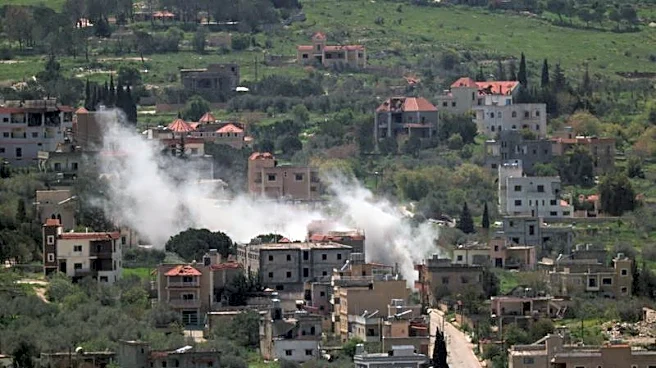
on the ground remains tense, with Hezbollah continuing to launch rocket barrages into northern Israel. This ongoing aggression underscores the challenges faced in achieving a peaceful resolution, as Hezbollah's actions suggest a reluctance to disarm or abandon its ambitions. The talks involve Israel's ambassador Yechiel Leiter and Lebanon's ambassador Nada Hamadeh Mawad, with the aim of establishing a stable and peaceful border. However, the reality of continued hostilities casts doubt on the effectiveness of these diplomatic efforts.
Why It's Important?
The peace talks between Israel and Lebanon are significant as they represent the first high-level engagement between the two countries since 1993. Successful negotiations could lead to a more stable Middle East, reducing the influence of Hezbollah and potentially fostering economic and social cooperation across the border. However, the ongoing rocket attacks by Hezbollah highlight the group's continued power and influence in Lebanon, posing a significant obstacle to peace. The outcome of these talks could have far-reaching implications for regional security and U.S. foreign policy, as well as for the residents of northern Israel who continue to live under the threat of violence.
What's Next?
The next steps involve direct negotiations between Israel and Lebanon, as agreed upon in the joint statement issued after the Washington meeting. The U.S. will likely continue to play a mediating role, with further discussions needed to address the disarmament of Hezbollah and the establishment of a lasting ceasefire. The international community, including countries like France and moderate Sunni nations, may also be called upon to support Lebanon's government and military, potentially offering financial incentives to weaken Hezbollah's influence. The success of these efforts will depend on the willingness of all parties to engage in meaningful dialogue and compromise.
Beyond the Headlines
The peace talks highlight the complex dynamics of Middle Eastern politics, where historical grievances and power struggles often impede diplomatic progress. The skepticism among Israeli residents reflects a broader distrust of negotiations with groups perceived as terrorist organizations. Additionally, the talks underscore the role of external powers, such as the U.S., in facilitating dialogue and attempting to broker peace in the region. The situation also raises questions about the balance of power within Lebanon, where Hezbollah's military capabilities challenge the authority of the Lebanese government.