

What's Happening?
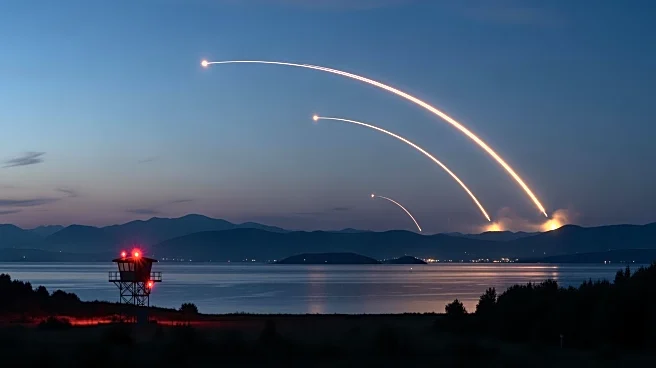
Israel is reducing its reliance on its most advanced missile interceptors due to ongoing Iranian missile and drone attacks, which are depleting stockpiles. The Israeli military is increasingly using upgraded but less capable systems, such as David’s Sling
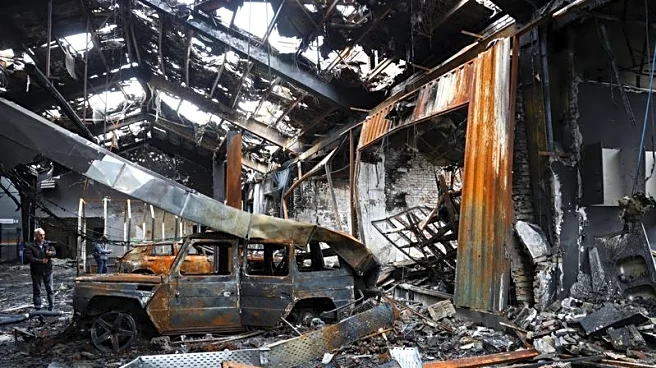
and Iron Dome, to handle threats they were not originally designed for. This shift comes as the conflict with Iran enters its fourth week, with Iran launching over 400 missiles and hundreds of drones. Recent incidents include Iranian missiles striking the southern Israeli cities of Dimona and Arad, highlighting the limitations of the modified systems. The Israeli air defense, known for its sophistication, is now under pressure to conserve high-end interceptors like the Arrow system, while adapting lower-tier systems to meet the demands of sustained high-volume warfare.
Why It's Important?
The decision to conserve advanced missile interceptors reflects the strategic challenges Israel faces in maintaining its defense capabilities amid prolonged conflict. The high cost and slow production of advanced interceptors contrast with Iran's ability to mass-produce missiles and drones, creating a significant strain on Israel's defense resources. This situation underscores the broader implications for military strategy and resource allocation, as Israel must carefully decide when and how to deploy its defensive systems. The ongoing conflict also raises concerns about the effectiveness of Israel's multi-tiered defense structure in sustained warfare, potentially impacting regional security dynamics and prompting international attention to the balance of military power in the Middle East.
What's Next?
Israel's military planners will continue to assess the evolving threat landscape, making strategic decisions on interceptor deployment to preserve capabilities for future scenarios. The adaptation of lower-tier systems will likely continue, with further software upgrades and operational adjustments to enhance their effectiveness. The international community may also monitor the situation closely, considering potential diplomatic or military responses to the ongoing conflict. Additionally, the strain on Israel's defense resources could prompt discussions on international support or collaboration to bolster its air defense capabilities.