
What's Happening?
Researchers have unearthed the skeletal remains of Nagatitan chaiyaphumensis, the largest-known dinosaur from Southeast Asia, in Thailand's Chaiyaphum province. This dinosaur, a member of the sauropod
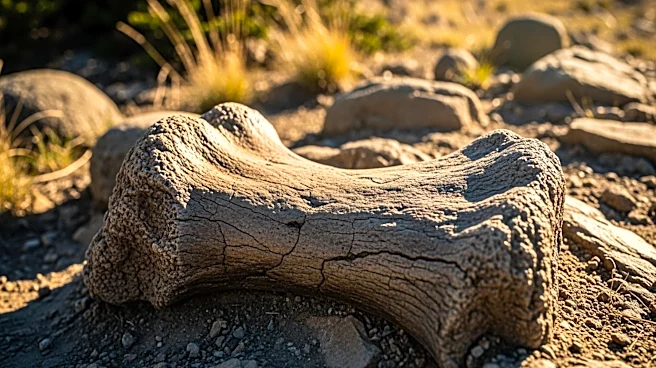
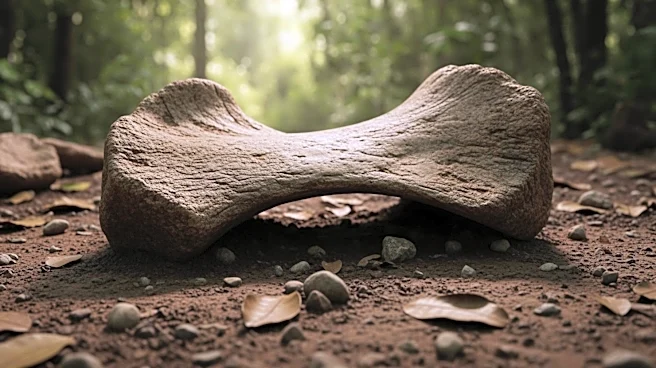
lineage, was approximately 90 feet long and weighed between 25 to 28 tons. The discovery includes spine, rib, pelvis, and leg bones, with a humerus measuring 5.8 feet long. Nagatitan lived around 113 million years ago during the Cretaceous Period in a subtropical climate with forests and savanna-like habitats. It coexisted with other dinosaurs and flying reptiles called pterosaurs. The ecosystem's largest predator was a relative of the Carcharodontosaurus, but Nagatitan's massive size likely protected it from predation.
Why It's Important?
The discovery of Nagatitan chaiyaphumensis provides significant insights into the diversity and evolution of sauropods in Southeast Asia. It highlights the region's prehistoric biodiversity and the ecological dynamics of the Cretaceous Period. Understanding the size and adaptations of Nagatitan can inform scientists about the environmental conditions of the time, such as high atmospheric carbon dioxide levels and global temperatures. This research contributes to the broader knowledge of dinosaur evolution and the factors influencing their gigantism, offering a glimpse into the prehistoric ecosystems that shaped the planet's biological history.
What's Next?
Further research is expected to focus on the ecological and evolutionary implications of Nagatitan's size and adaptations. Scientists may explore the relationship between large body size and climatic conditions, as well as the impact of environmental changes on sauropod diversity. Continued excavation and analysis of the site in Thailand could uncover additional fossils, providing more comprehensive data on the region's prehistoric fauna. This discovery may also prompt comparative studies with other large sauropods found in different parts of the world, enhancing the understanding of global dinosaur distribution and evolution.
Beyond the Headlines
Nagatitan's discovery underscores the importance of paleontological research in Southeast Asia, a region with relatively few known sauropod fossils. The findings may influence future conservation efforts by highlighting the region's rich prehistoric heritage. Additionally, the study of Nagatitan's adaptations, such as its lightweight skeleton with air sacs, could inspire biomimetic designs in engineering and architecture. The cultural significance of the dinosaur's name, referencing the Naga from Asian religious traditions, also reflects the intersection of science and local heritage, fostering a deeper appreciation for the region's natural history.