









What's Happening?
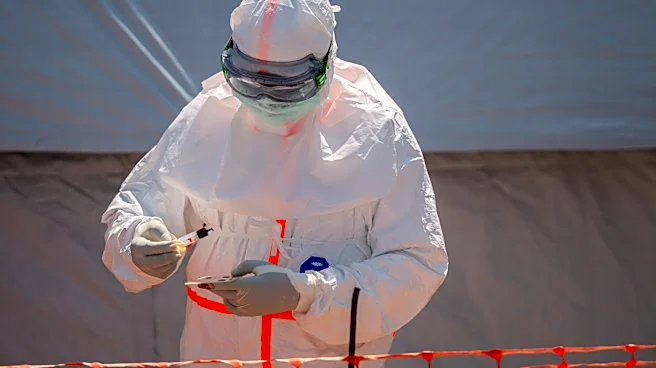
A US citizen working in the Democratic Republic of Congo (DRC) has contracted Ebola, becoming the second American to be infected during the current outbreak. This individual has been sent to Germany for medical care, rather than being treated in the United
States. The outbreak, which began on May 15, is the third largest on record, with 1,926 cases and 702 deaths reported as of July 12. The US government, under President Trump's administration, has implemented strict travel restrictions and has blocked the repatriation of citizens exposed to or infected with the virus, despite having facilities capable of treating such cases. The World Health Organization (WHO) is actively involved in managing the outbreak, with its Director-General, Tedros Adhanom Ghebreyesus, calling for increased international support to control the virus's spread.
Why It's Important?
The US government's decision to send infected citizens to Germany rather than treating them domestically highlights a significant shift in policy under President Trump's administration. This approach may impact the US's role in global health crises and its relationships with international health organizations like the WHO. The decision to avoid repatriation could be seen as a move towards isolationism, potentially affecting the US's ability to respond to future health emergencies. Additionally, the outbreak's escalation poses a threat to global health security, emphasizing the need for coordinated international efforts to contain the virus.
What's Next?
The ongoing Ebola outbreak in the DRC requires an accelerated response from local, national, and international partners. The WHO, in collaboration with the African CDC, is working to control the outbreak. The US's continued stance on not repatriating infected citizens may lead to further reliance on international partners for treatment and containment efforts. The situation may prompt discussions on the US's role in global health and its preparedness for handling infectious disease outbreaks domestically.
Beyond the Headlines
The US's current policy on handling Ebola-infected citizens raises ethical questions about the responsibility of nations to their citizens during health crises. The decision to send patients abroad for treatment, despite having the capability to treat them domestically, could set a precedent for how similar situations are handled in the future. This approach may also influence public perception of the US's commitment to global health and its willingness to collaborate with international health organizations.