



What's Happening?
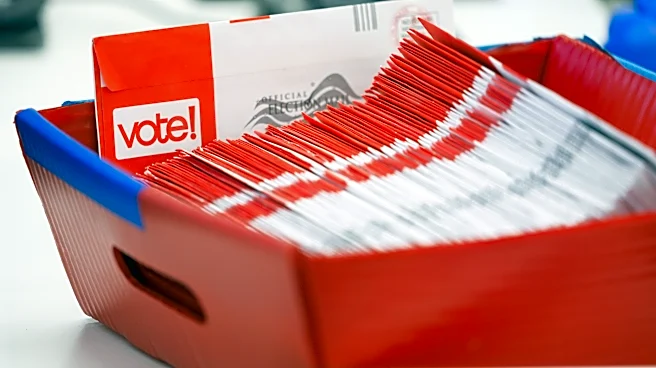
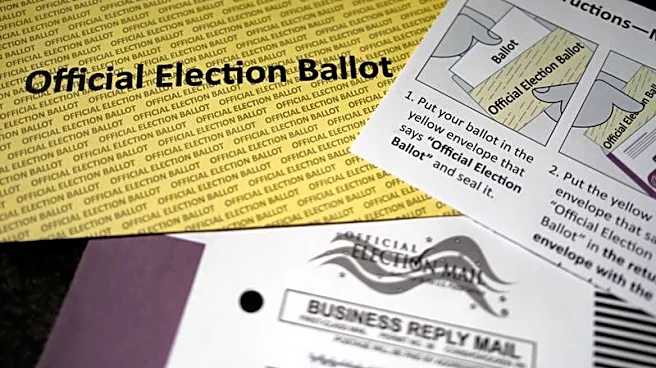
A federal judge has ruled not to block President Trump's executive order that restricts voting by mail. The order, issued on March 31, directs the Department of Homeland Security and the Social Security Administration to compile lists of adult U.S. citizens
for state election officials. It also mandates the U.S. Postal Service to deliver mail-in ballots only to eligible voters. U.S. District Judge Carl Nichols, a Trump appointee, decided it was premature to issue an emergency ruling to halt the order, as its directives have not yet been implemented. This decision comes amid ongoing legal challenges and debates over voting rights and election integrity.
Why It's Important?
The ruling has significant implications for voting rights and election processes in the U.S. It highlights the ongoing debate over mail-in voting, which has been a contentious issue in recent elections. Supporters argue that mail-in voting increases accessibility and participation, while opponents raise concerns about potential fraud. The decision to allow the executive order to proceed could impact voter turnout and the administration of upcoming elections. It also reflects broader political and legal battles over voting rights, with potential consequences for future electoral processes and democratic participation.
What's Next?
As the legal challenges continue, further court rulings are expected, which could alter the implementation of the executive order. The decision may also prompt legislative responses at both state and federal levels to address concerns about voting rights and election security. Political leaders and advocacy groups are likely to continue their efforts to influence public opinion and policy regarding mail-in voting. The outcome of these legal and political battles could shape the landscape of U.S. elections and voting rights for years to come.