




What's Happening?
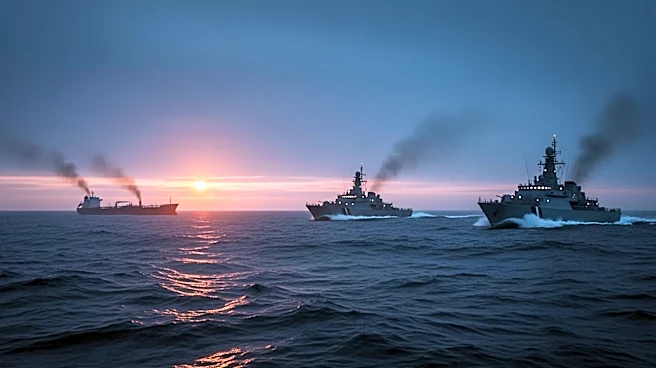
Iranian officials have declared the Strait of Hormuz closed, reversing previous statements that it would remain open during a ceasefire. This decision comes amid reports of Iranian forces firing on several ships, including a containership and a tanker,
in the region. The UK Maritime Trade Operations (UKMTO) reported that a containership was struck by a projectile, causing damage to containers but no injuries. Additionally, two Indian vessels were forced to turn back after being fired upon by Iran's Sepah Navy. The closure of the Strait, a critical maritime passage, follows accusations from Iran that the United States violated the ceasefire by continuing to blockade Iranian ships and ports.
Why It's Important?
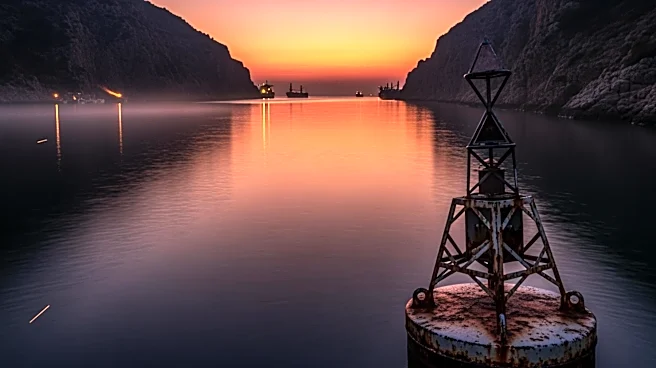
The closure of the Strait of Hormuz, a vital chokepoint for global oil shipments, could have significant implications for international trade and energy markets. The strait is a critical route for oil exports from the Middle East, and its closure could lead to increased oil prices and heightened geopolitical tensions. The situation underscores the fragile nature of U.S.-Iran relations and the potential for escalation in the region. The firing on vessels and the imposition of strict conditions by Iran highlight the risks to maritime security and the potential for further disruptions in global shipping routes.
What's Next?
The situation is likely to prompt responses from major stakeholders, including the United States and other countries reliant on oil shipments through the Strait of Hormuz. Diplomatic efforts may intensify to de-escalate tensions and ensure the safe passage of vessels. The U.S. may seek to negotiate with Iran to reopen the strait, while also considering military options to protect shipping lanes. The international community will be closely monitoring developments, as any prolonged closure could have far-reaching economic and political consequences.