



What's Happening?
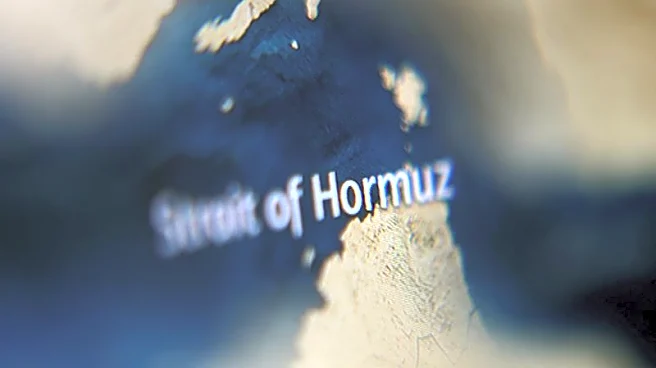
Bahrain's attempt to secure a United Nations resolution to authorize protective measures for commercial shipping in the Strait of Hormuz has encountered significant obstacles. The resolution, which Bahrain circulated as the current president of the UN
Security Council, aims to address the effective closure of the waterway by Iran, which has led to a major energy supply disruption. The draft resolution initially included a reference to binding enforcement under Chapter VII of the UN Charter, which allows for military action. However, this was removed in hopes of gaining broader support. Despite these changes, the resolution faces opposition from key Security Council members, including Russia, China, and France. The situation remains tense as the strait, a critical passage for global oil and gas, has been largely shut down since the conflict began, causing energy prices to soar.
Why It's Important?
The closure of the Strait of Hormuz has significant implications for global energy markets, as it is a vital route for oil and gas shipments. The inability to secure a UN resolution reflects deep divisions among major powers on how to handle the situation, particularly regarding the use of force. The ongoing conflict and the strait's closure have already led to increased energy prices, affecting economies worldwide. The situation also highlights geopolitical tensions, with President Trump urging NATO allies to take a more active role in securing the strait, while France and other nations emphasize the alliance's defensive nature. The outcome of these diplomatic efforts will have far-reaching consequences for international relations and energy security.
What's Next?
Diplomatic efforts are ongoing to find a resolution that can gain consensus among UN Security Council members. France has proposed an alternative resolution that would seek a UN mandate once the situation stabilizes. Meanwhile, discussions continue among Gulf and Western powers to develop a concrete plan to reopen the strait. The international community is closely watching these developments, as the resolution's success or failure will impact global energy markets and geopolitical dynamics. The situation also poses a test for international cooperation in addressing security challenges in critical maritime routes.