


What's Happening?
House Natural Resources Committee Ranking Member Jared Huffman (D-Calif.) and Oversight and Investigations Subcommittee Ranking Member Maxine Dexter (D-Ore.) have sent letters to the National Park Service Acting Director Jessica Bowron and Trust for the National Mall
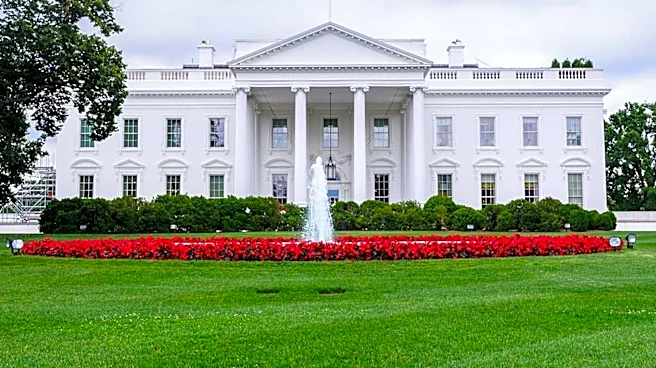
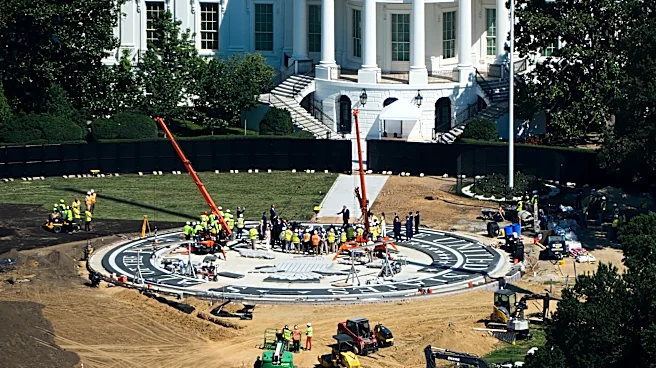
President and CEO Catherine Townsend and COO Cindy Willmann. The letters request briefings on the fundraising agreements and donor vetting procedures related to President Trump’s White House Ballroom. The lawmakers expressed concerns that a court-compelled agreement allows the White House to select donors while keeping their identities confidential from the Trust, which is responsible for screening for conflicts of interest. This arrangement, they argue, bypasses the National Park Service’s own protections against potential conflicts of interest, including agency review of large donations, audits for partners raising over $1 million, and Inspector General scrutiny. The Trust had previously declined a meeting request regarding the Ballroom donations.
Why It's Important?
This inquiry highlights significant concerns about transparency and potential undue influence in public-private partnerships involving federal property. The alleged ability of the White House to handpick donors and conceal their identities from the vetting organization raises questions about the integrity of the fundraising process and the potential for conflicts of interest. If the Trust for the National Mall is being used as a conduit for corporations and billionaires to gain political favor, it could undermine public trust in government institutions and the rule of law. The lawmakers also suggest that the anonymity provisions could create a loophole for foreign entities to donate without proper review, potentially compromising national security and ethical standards. The situation underscores the ongoing debate about the appropriate use of federal property and the need for robust oversight of fundraising activities associated with government projects.
What's Next?
The National Park Service and the Trust for the National Mall are expected to respond to the lawmakers' requests for briefings. These briefings will likely involve detailed discussions about the fundraising agreements, donor vetting procedures, and the rationale behind the current arrangement. Depending on the information provided, further congressional action, such as hearings or legislative proposals, could follow to address the transparency and oversight concerns. Public and media scrutiny of the responses will also be a factor, potentially influencing public perception of the Trust and the National Park Service. The outcome of these inquiries could lead to revised policies for public-private partnerships involving federal assets, particularly concerning donor disclosure and conflict-of-interest safeguards.
Beyond the Headlines
The controversy surrounding President Trump’s White House Ballroom donations touches upon broader ethical and governance issues. It raises fundamental questions about the commercialization of public spaces and the potential for private interests to influence public policy through opaque financial contributions. The lawmakers' assertion that 'The White House is a protected site that belongs to the American people. It is not private property subject to the whims of a President determined to use it for his own aggrandizement' encapsulates the core of the ethical debate. This situation could set a precedent for how future administrations engage with private donors for projects on federal land, potentially leading to increased demands for stricter regulations on donor transparency and accountability to prevent perceived or actual quid pro quo arrangements. The long-term implications could include a re-evaluation of the balance between private funding for public projects and the imperative to maintain public trust and governmental integrity.