



What's Happening?
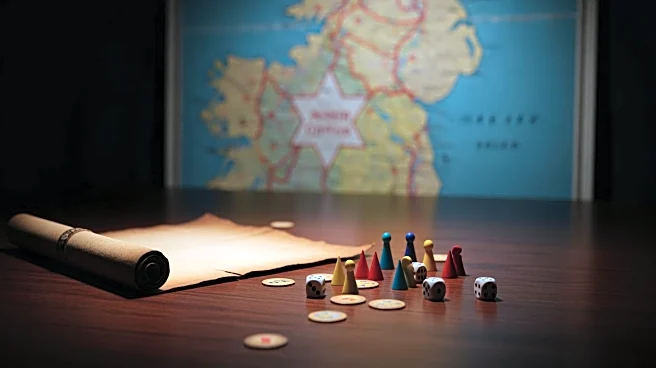
A proposed board game titled 'The Troubles: Shadow War in Northern Ireland 1964-1998' has sparked controversy due to its depiction of the Northern Ireland conflict. The game, developed by Scottish teacher Hugh O'Donnell and produced by Compass Games,
aims to simulate historical events from the Troubles using cards and dice. Players can assume roles such as unionist or nationalist politicians, the Royal Ulster Constabulary, or paramilitary groups. The game is still in development and not yet available for purchase. Critics, including victims' groups, argue that the game trivializes the conflict, which resulted in over 3,500 deaths and numerous injuries. Kenny Donaldson from the South East Fermanagh Foundation and Dr. Paul Gallagher from the victims' group Wave have expressed concerns about the game's potential to minimize the experiences of those affected by the Troubles.
Why It's Important?
The controversy surrounding the game highlights the ongoing sensitivity and complexity of the Northern Ireland conflict, which continues to impact many lives. The criticism from victims' groups underscores the challenges of representing historical trauma in media and entertainment. The game's reception could influence how similar historical events are portrayed in the future, raising questions about the balance between education and exploitation. The developers' intention to foster empathy and engagement through gameplay is at odds with the perception of insensitivity by those who lived through the conflict. This situation reflects broader societal debates on how to appropriately commemorate and educate about painful historical events.
What's Next?
As the game is still under development, its creators may need to address the concerns raised by victims' groups to avoid further backlash. This could involve consulting with those affected by the Troubles to ensure a respectful and accurate portrayal of events. The response from the public and stakeholders will likely influence the game's final content and release strategy. Additionally, the ongoing dialogue may prompt broader discussions about the ethical considerations of using historical conflicts as entertainment. The developers' approach to these challenges will be crucial in determining the game's reception and potential educational value.