







What's Happening?
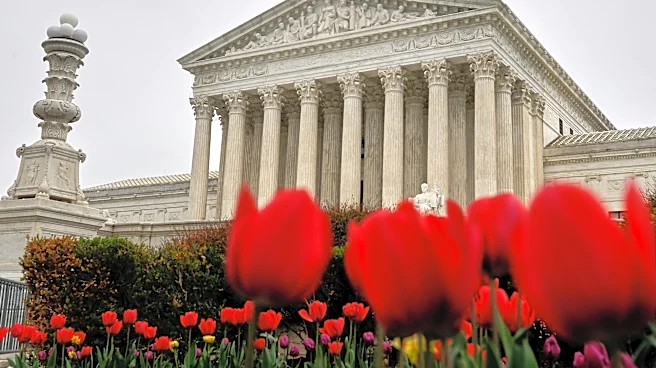
The Michigan Supreme Court has approved a new rule that restricts the ability of U.S. Immigration and Customs Enforcement (ICE) to make arrests in state courthouses. This rule, effective Friday, prohibits the arrest of parties, lawyers, and subpoenaed
witnesses involved in civil cases while they are attending legal proceedings. Court officers and jurors are also protected under this rule. The decision follows similar actions by other states and jurisdictions in response to ICE activities. The Michigan justices expedited the proposal, which was made public last November, to address concerns about the impact of ICE arrests on the judicial process.
Why It's Important?
This ruling is significant as it aims to protect the integrity of the judicial process by ensuring that individuals involved in legal proceedings can participate without fear of arrest. It addresses concerns that ICE activities in courthouses could deter individuals from attending court, potentially undermining the justice system. The decision reflects a broader trend of states seeking to limit federal immigration enforcement in sensitive locations. This move could influence public policy and legal practices, potentially leading to similar measures in other states. It also highlights ongoing tensions between state and federal authorities over immigration enforcement.
What's Next?
The implementation of this rule may lead to legal challenges or adjustments in ICE's enforcement strategies. Stakeholders, including legal advocacy groups and immigrant communities, will likely monitor its impact closely. The rule could prompt discussions about the balance between state authority and federal immigration enforcement. Other states may consider adopting similar measures, potentially leading to a patchwork of policies across the country. The Michigan Supreme Court's decision may also influence future legislative or judicial actions related to immigration enforcement in sensitive locations.