



What's Happening?
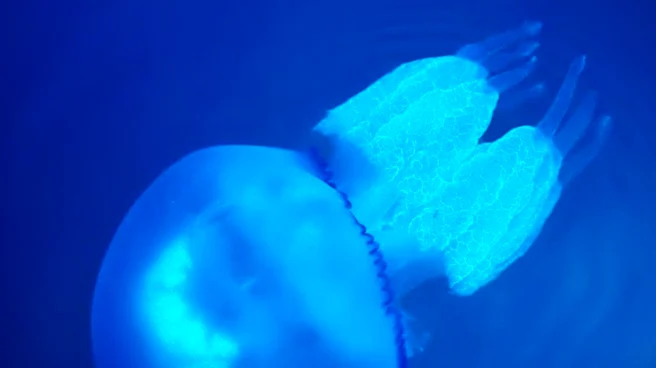
The Turritopsis dohrnii, commonly known as the immortal jellyfish, has captured scientific interest due to its unique ability to revert to its juvenile form, effectively bypassing death. This jellyfish, found in various oceans around the world, can transform
back into a polyp stage when faced with environmental stressors, a process known as cellular transdifferentiation. This remarkable biological capability has sparked discussions about its potential implications for understanding aging and longevity in other species, including humans.
Why It's Important?
The study of the immortal jellyfish offers valuable insights into the biological processes of aging and regeneration. Understanding how this jellyfish achieves cellular transdifferentiation could have significant implications for medical research, particularly in the fields of regenerative medicine and aging. The potential to unlock the secrets of this process could lead to breakthroughs in extending human lifespan and improving health outcomes. Additionally, the jellyfish's resilience highlights the adaptability of life forms in response to environmental challenges.