




What's Happening?
A sheriff's deputy in Dale County, Alabama, sustained minor injuries on Friday night while responding to storm damage caused by Hurricane Isaias. Dale County Sheriff Mason Bynum confirmed the incident. The deputy was at the scene of a rollover vehicle
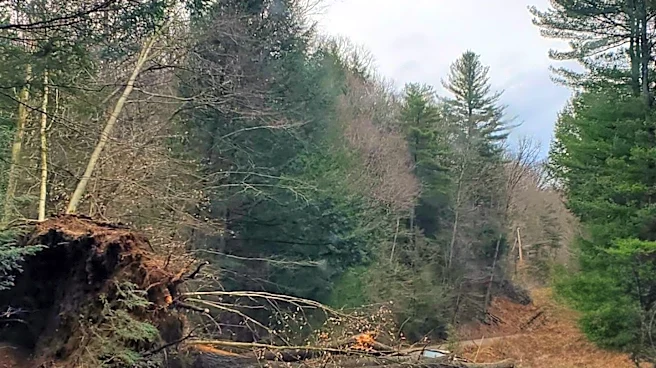
crash on U.S. Highway 231 in Newton, which occurred after a car struck a downed tree, causing it to fall. Multiple other vehicles subsequently hit the same tree. While deputies were on site, a second tree fell, striking one of the involved vehicles and trapping its driver. The falling tree also hit the deputy. The deputy was transported to an area hospital with minor injuries, and the entrapped driver was extricated and reported to be in good condition. Sheriff Bynum urged residents to avoid roadways due to numerous downed trees and hazardous conditions.
Why It's Important?
This incident highlights the significant dangers faced by first responders during severe weather events like hurricanes. Deputies and other emergency personnel put themselves at considerable risk to assist the public, often in rapidly deteriorating and unpredictable conditions. The event underscores the immediate and tangible impact of natural disasters on public safety and infrastructure, as downed trees can cause multiple accidents and impede emergency services. Furthermore, Sheriff Bynum's warning for residents to stay off the roads emphasizes the critical importance of heeding official advisories during storms to prevent further injuries and allow emergency crews to operate safely. The incident also brings attention to the strain placed on local resources and personnel when responding to widespread storm damage, affecting both human safety and the efficient restoration of normalcy.
What's Next?
Authorities will likely continue to assess and clear roadways of downed trees and debris in Dale County and other affected areas as Hurricane Isaias passes. Emergency services will remain on high alert to respond to further incidents and assist residents. The injured deputy will receive medical care, and an internal review of the incident may occur to understand the circumstances better and potentially refine safety protocols for storm responses. Public advisories urging caution and road closures are expected to remain in effect until conditions are deemed safe. Local governments and utility companies will focus on restoring power and clearing transportation routes. The incident serves as a reminder for communities to review and update their disaster preparedness plans, particularly concerning the safety of first responders and public communication during hazardous weather.
Beyond the Headlines
This event underscores the broader societal reliance on emergency services and the often-unseen risks they undertake. Beyond the immediate physical danger, such incidents can have psychological impacts on first responders, who regularly face traumatic situations. It also brings into focus the vulnerability of infrastructure, particularly trees and power lines, to severe weather, prompting discussions about urban planning, tree management, and resilience strategies in hurricane-prone regions. The repeated call for citizens to stay off roads during storms reflects a persistent challenge in public compliance, highlighting the need for effective public awareness campaigns about disaster safety. Ultimately, this incident serves as a stark reminder of the human cost of natural disasters and the collective responsibility to support and protect those who serve on the front lines.