






What's Happening?
Mayor Mondale Robinson of Enfield, North Carolina, has launched a new coalition aimed at helping small U.S. towns lead the clean energy transition. This initiative, announced at a Canary Media summit, seeks to unite officials from locales with fewer than
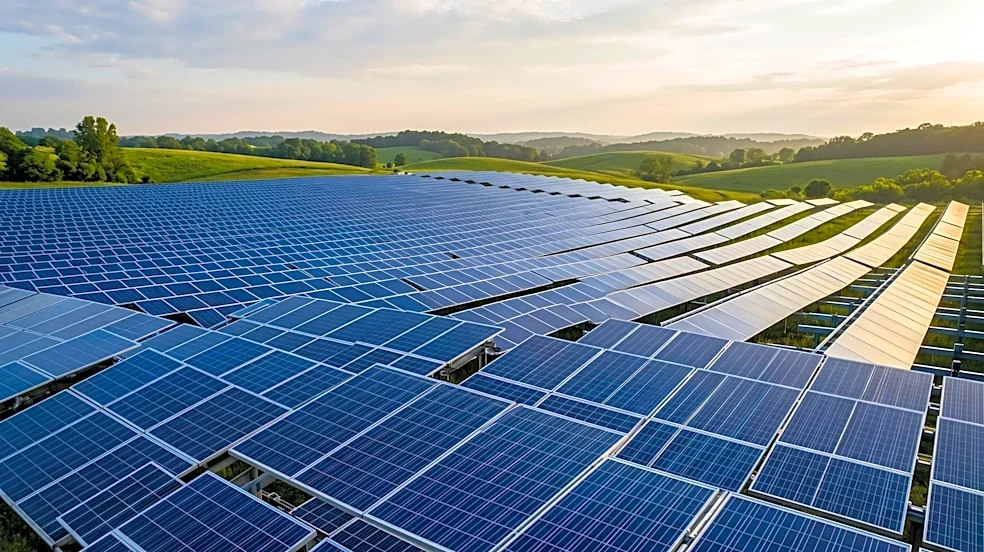
30,000 people, a demographic often overlooked by larger organizations like the U.S. Conference of Mayors and philanthropic foundations. Robinson's vision for the National Conference of Small Cities and Rural Mayors includes providing training, fostering peer-to-peer networks, encouraging regional collaboration, and establishing a shared voice for federal advocacy. The goal is to empower these towns, which constitute 93% of incorporated municipalities and house approximately 60 million people, to overcome resource limitations and implement innovative clean energy models, such as Enfield's plan for a solar farm and a thermal energy network.
Why It's Important?
This new coalition is critically important for addressing the unique challenges small towns face in accessing resources and expertise for clean energy initiatives. By uniting, these towns can amplify their voices in federal policy discussions, attract much-needed funding, and gain access to specialists who can help tackle complex issues like climate change, housing, and food insecurity. The initiative highlights a significant disparity in resource allocation, with 90% of philanthropy currently directed towards urban areas. Empowering small towns to develop their own clean energy solutions can lead to localized economic development, job creation, and reduced energy costs for residents, particularly in economically distressed regions. This collaborative approach could serve as a blueprint for sustainable development across rural America, demonstrating that collective action can overcome individual resource constraints.
What's Next?
The immediate next steps for the National Conference of Small Cities and Rural Mayors involve recruiting its first 100 founding mayors and securing anchor foundations to support its mission. Longer-term goals include establishing comprehensive training programs, facilitating robust peer-to-peer networks for knowledge sharing, and building strong regional collaborations. The coalition will also focus on federal advocacy to ensure that the needs and potential of small towns are recognized in national clean energy policies and funding allocations. Success in towns like Enfield, which is already pursuing a thermal energy network with a seed grant, could serve as a model for other municipalities. This movement is expected to grow, potentially leading to a significant shift in how clean energy transitions are supported and implemented at the local level across the U.S.
Beyond the Headlines
Beyond the practical aspects of clean energy adoption, this coalition addresses deeper issues of political representation and equitable resource distribution. By organizing, small towns are challenging the traditional power structures that often prioritize larger urban centers. This collective action can foster a renewed sense of civic engagement and local autonomy, allowing communities to shape their own sustainable futures. The initiative also underscores the idea that innovation is not exclusive to metropolitan areas; small towns, with their agility and close-knit communities, can become vital testing grounds for new clean energy models. This movement could lead to a re-evaluation of how federal and philanthropic resources are distributed, promoting a more inclusive approach to national development and ensuring that the benefits of the clean energy transition are shared more broadly across the country.