





What's Happening?
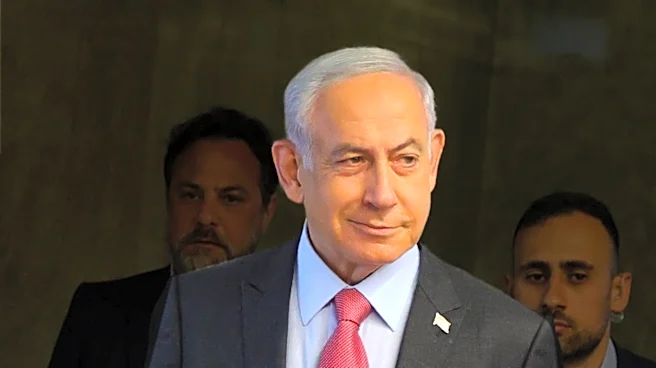
Prime Minister Benjamin Netanyahu has publicly rejected claims of 'betrayal' regarding the October 7 massacre, instead attributing the events to a major operational and intelligence failure. In a video posted on social media, Netanyahu dismissed suggestions
that senior officials had betrayed the country, stating, "Nonsense." He clarified that while there was a catastrophic failure, it was not an act of treason. Netanyahu explained that warning signs emerged during the night and early morning before the attack, but officials made a 'miscalculation' and decided not to wake him or launch a preemptive strike, fearing it would provoke Hamas. He emphasized that this was a failure, not betrayal, despite the terrible price paid. Netanyahu also defended his wife, Sara Netanyahu, against claims that she had alleged treason, calling such suggestions "nonsense." His remarks follow an interview given by Sara Netanyahu to Channel 14, where she implied that Democrats party chairman Yair Golan might have had prior knowledge of the October 7 attack.
Why It's Important?
Prime Minister Netanyahu's public statement is a significant attempt to shape the narrative surrounding the October 7 attacks and deflect accusations of betrayal, which have been circulating in the Israeli public and political discourse. By framing the events as an 'operational and intelligence failure' rather than 'betrayal,' he aims to manage public perception and potentially mitigate political fallout. This distinction is crucial for his political survival and the stability of his government, as accusations of treason carry far greater weight and could lead to widespread public outrage and demands for accountability at the highest levels. The ongoing debate about who knew what and when, and the decision not to alert the Prime Minister, highlights deep-seated issues within Israel's security and intelligence apparatus. The controversy also underscores the intense political climate in Israel, where even the Prime Minister's family members are drawn into public disputes, as evidenced by the defamation threats exchanged between Sara Netanyahu and Yair Golan.
What's Next?
Prime Minister Netanyahu's explanation is unlikely to fully quell the public and political debate surrounding the October 7 events. Opposition parties and segments of the public will likely continue to demand a comprehensive and independent investigation into the failures that led to the attack, regardless of whether they are labeled as 'betrayal' or 'operational failure.' The ongoing legal dispute between Sara Netanyahu and Yair Golan could also keep the issue in the public eye, potentially revealing more details or further polarizing public opinion. The Prime Minister's efforts to distance himself from direct responsibility may face scrutiny, especially as more information emerges from internal inquiries or media investigations. The long-term political implications for Netanyahu and his government remain uncertain, as public trust and confidence in leadership are critical, particularly during times of conflict. The focus will likely shift to accountability and reforms within the security establishment to prevent future failures.
Beyond the Headlines
The debate over 'betrayal' versus 'operational failure' delves into the psychological and societal impact of a national trauma. For many Israelis, the October 7 attack represents a profound breach of trust and a failure of the state to protect its citizens. The distinction between intentional betrayal and systemic failure, while legally and politically significant, may not fully address the emotional and existential questions raised by the event. This discourse also reflects deeper societal anxieties about leadership, accountability, and the future security of the nation. The attempt to control the narrative highlights the power of language in shaping public perception and political outcomes. Furthermore, the involvement of the Prime Minister's family in public disputes underscores the highly personalized and often acrimonious nature of Israeli politics, where personal attacks and accusations can overshadow substantive policy debates. The long-term healing process for the nation will depend not only on understanding what happened but also on how accountability is assigned and how trust is rebuilt.