
What's Happening?
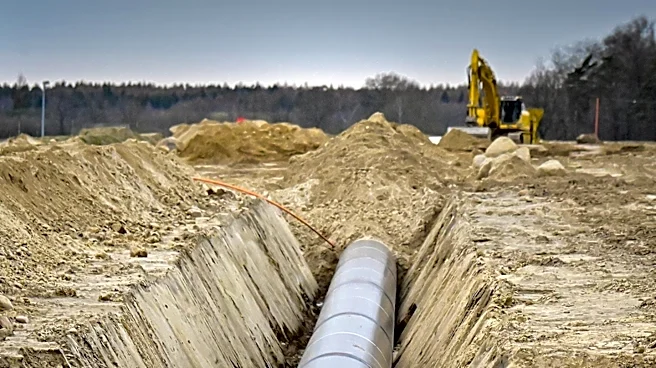
The proposed Dakota Mainstem Regional Water System, a pipeline intended to deliver Missouri River water across eastern South Dakota, is estimated to cost between $8.4 billion and $10 billion. This estimate includes
a 30% contingency due to numerous unknown factors. The pipeline aims to serve nearly 60 water providers in South Dakota and parts of three neighboring states, with a capacity of 195 million gallons per day. The project is driven by industry and population growth, with the Minnehaha Community Water Corporation already experiencing capacity limits. Federal legislation is being sought to fund feasibility studies for this and other regional water projects.
Why It's Important?
The development of this pipeline is crucial for addressing water supply challenges in eastern South Dakota, particularly in light of increasing demand due to population and industrial growth. Ensuring a reliable water supply is essential for supporting economic development and maintaining quality of life in the region. The project's significant cost underscores the complexity and scale of infrastructure needed to meet future water needs. Successful implementation could serve as a model for other regions facing similar challenges, highlighting the importance of strategic planning and investment in public utilities.