




What's Happening?
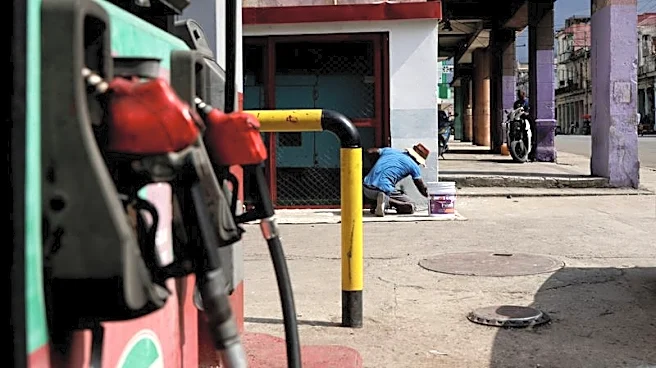
Cuba is currently experiencing one of its most severe economic crises in decades, characterized by soaring prices, chronic shortages, and frequent power outages. The crisis is largely driven by a combination of U.S. sanctions, a shortage of foreign currency,
and weak tourism revenues. These economic challenges have led to significant inflation, eroding the purchasing power of many Cubans, particularly affecting pensioners and low-income families. The shortages of medicine and essential goods have further exacerbated the situation, prompting aid organizations and volunteers to step in to provide relief. The Cuban government has responded by approving measures to open the island's socialist economy to private and foreign investment, marking a significant shift towards free-market capitalism.
Why It's Important?
The economic crisis in Cuba has significant implications for the island's future and its relations with the United States. The U.S. sanctions, aimed at pressuring the Cuban government to make political and economic changes, have intensified the economic hardships faced by the Cuban population. This situation could lead to increased migration pressures on the U.S., as more Cubans may seek to leave the island in search of better opportunities. Additionally, the Cuban government's move towards embracing free-market capitalism could lead to significant changes in the country's economic structure, potentially affecting U.S. businesses and investors interested in the Cuban market. The crisis also highlights the ongoing geopolitical tensions between the U.S. and Cuba, with potential implications for regional stability in the Caribbean.
What's Next?
The Cuban government's recent measures to open the economy to private and foreign investment could lead to increased economic activity and potentially alleviate some of the current hardships. However, the success of these measures will depend on the government's ability to attract foreign investors and manage the transition towards a more market-oriented economy. The U.S. may continue to exert pressure through sanctions, but there could be opportunities for diplomatic engagement if both sides are willing to negotiate. The international community, including aid organizations, may also play a role in providing humanitarian assistance to alleviate the immediate needs of the Cuban population.