






What's Happening?
U.S. Senator Dick Durbin and Representative Bill Foster have publicly criticized the federal government's decision not to renew a contract that funds legal services for immigrant children who arrived in the U.S. without a parent or guardian. During a press
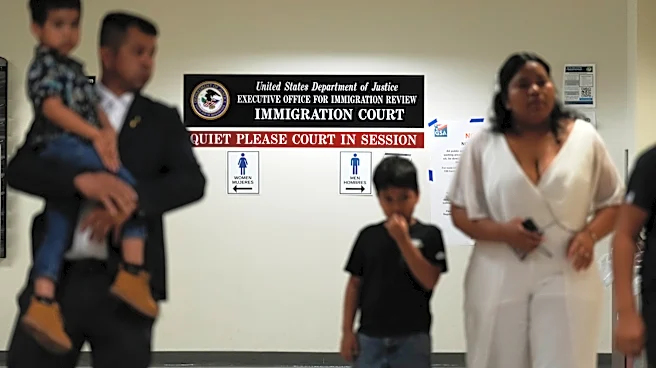
conference in Naperville, they highlighted the impact of this decision, which affects thousands of children who are now at risk of losing legal representation. The contract, which expired recently, supported a network of nearly 100 legal groups providing assistance to about 20,000 children. Despite the contract's existence, the Trump administration reportedly owes $65 million to these legal groups, withholding payments for political reasons. This financial strain has left some organizations unable to pay their attorneys, potentially leaving children to face immigration court without legal representation. The Department of Justice has also implemented policies that limit legal options for children with Special Immigrant Juvenile Status, increasing the likelihood of deportation.
Why It's Important?
The halt in funding for legal services for immigrant children has significant implications for the U.S. immigration system and the welfare of vulnerable minors. Without legal representation, these children face increased risks of deportation, even if they have been granted Special Immigrant Juvenile Status, which is intended to protect them. The situation underscores broader political tensions surrounding immigration policy, with Durbin and Foster attributing the funding issues to political maneuvering by the Trump administration. The lack of bipartisan support for these children, who have historically received backing from both parties, marks a shift in congressional attitudes towards immigration. This development could lead to increased scrutiny of the administration's immigration policies and their humanitarian impact.
What's Next?
The future of legal services for immigrant children remains uncertain. Durbin and Foster have called for a change in congressional attitudes, particularly among Republicans, to address the funding and policy issues affecting these children. The situation may prompt further legislative discussions and potential interventions to restore funding and legal protections. Advocacy groups and legal organizations are likely to continue pressing for solutions to ensure that children receive the representation they need. The broader debate over immigration policy and its humanitarian implications is expected to persist, potentially influencing upcoming legislative sessions and elections.