







What's Happening?
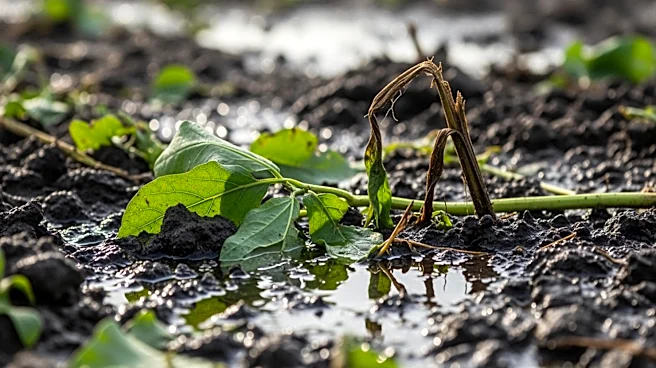
Hawaii has experienced its worst flooding in 20 years, severely impacting small farms on Oahu's North Shore. The flooding, caused by back-to-back storms in March, has resulted in an estimated $50 million in damage to crops, livestock, and equipment. Many
of the affected farms are small, family-run operations, often by immigrant families, who were days away from harvest. Without crop insurance, these farmers are now relying on a mix of relief grants, loans, and charitable donations to recover. The flooding has highlighted Hawaii's vulnerability and the critical need for local food security, as farmers markets and grocery stores across the islands are seeing reduced offerings.
Why It's Important?
The flooding in Hawaii underscores the fragility of local agriculture in isolated regions and the broader implications for food security. With over 600 farms reporting significant damage, the local food supply chain is disrupted, affecting both the economy and the availability of fresh produce. The situation is exacerbated by the fact that many of these farms are too small to qualify for crop insurance, leaving them financially vulnerable. The disaster highlights the importance of supporting local agriculture to ensure resilience against natural disasters and global supply chain disruptions, which were notably strained during the COVID-19 pandemic.
What's Next?
Efforts are underway to support the recovery of Hawaii's farms, including federal disaster relief, emergency grants, and long-term loans. The state is also conducting soil safety tests and providing seeds and plant starts to help farmers restart their operations. However, the path to recovery is uncertain, as many farmers face months of limited harvests and financial strain. The situation calls for increased investment in local agriculture infrastructure and policies that can better protect small farmers from future disasters.